Leave Your Message

2026 Best Silicon Carbide Crucible Buying Guide

Demand for high-temperature processing is reshaping how manufacturers evaluate a Silicon Carbide Crucible in 2026. Semiconductor, photovoltaic, foundry, and specialty-alloy producers now require cleaner melts, stable dimensions, and predictable service life. A crucible is not merely a container. It directly affects contamination, energy use, downtime, and final metal quality.

Industry reports support this wider market pressure. Grand View Research projects strong growth for the global silicon carbide market through 2030, driven by power electronics, renewable energy, and industrial applications. Yole Group also identifies expanding SiC wafer and device production as a major investment area. These reports do not measure crucible sales directly. That limitation matters. Market growth does not automatically guarantee better crucible performance.

This guide connects industry trends with practical purchasing evidence. It examines material purity, SiC content, graphite bonding, wall thickness, thermal-shock resistance, maximum operating temperature, and compatibility with aluminum, copper, precious metals, and other alloys. Experienced operators should inspect pouring lips, surface glazing, cracks, and dimensional changes after each heating cycle. Small defects can become expensive failures.

Look beyond the price tag.

A reliable supplier should provide technical data, batch traceability, operating guidance, and clear warranty terms. Laboratory claims still need production validation. In practice, furnace atmosphere, heating speed, flux chemistry, handling technique, and operator training can change service life significantly. This 2026 buying guide therefore compares specifications with real operating conditions, helping purchasers select a Silicon Carbide Crucible that balances thermal performance, safety, cost, and repeatable results.
2026 Best Silicon Carbide Crucible Buying Guide

What Is a Silicon Carbide Crucible and How Does It Work?

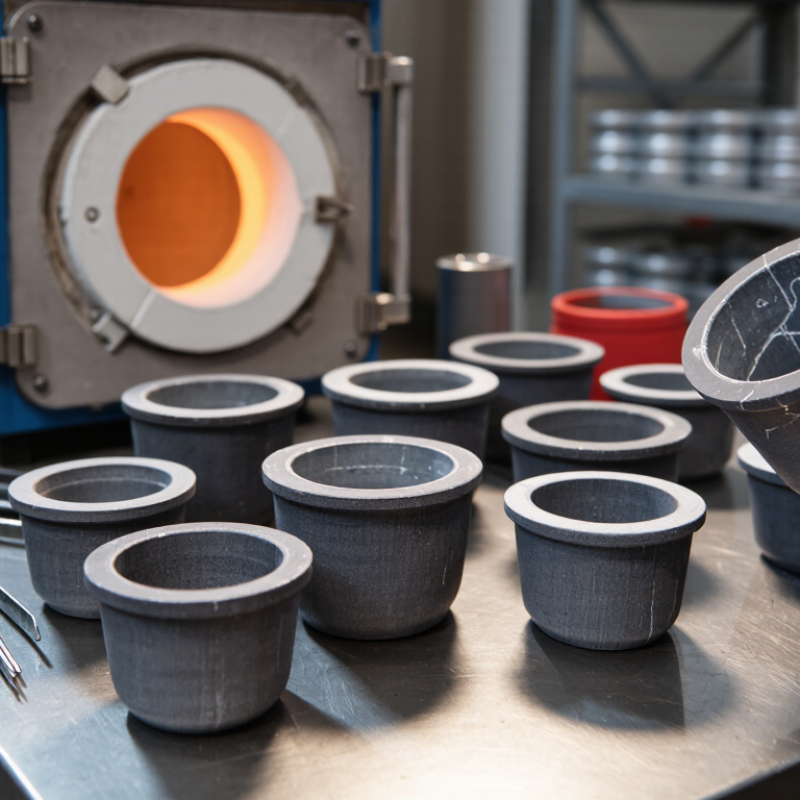
A silicon carbide crucible is a high-temperature vessel made from silicon carbide grains, carbon, and bonding materials. It holds molten metals during melting, alloying, and casting. It is not glass. Its dense structure transfers heat efficiently while resisting chemical attack and repeated thermal shock. When placed inside a furnace, the crucible absorbs radiant heat, warms the charge, and keeps the liquid metal separated from furnace gases and contaminants.

Silicon carbide works through several material advantages. Its high thermal conductivity helps reduce uneven heating. Its refractory structure also tolerates rapid temperature changes better than many clay-graphite vessels. The U.S. Geological Survey’s 2024 Mineral Commodity Summaries identifies silicon carbide as an important refractory and abrasive material. A 2024 market assessment by Precedence Research estimates the broader silicon carbide market could grow from about USD 4.3 billion in 2023 to USD 13.2 billion by 2032. That figure covers more than crucibles, but it reflects rising industrial interest in SiC materials.

Selection still requires judgment. Check the maximum operating temperature, metal compatibility, wall thickness, porosity, and furnace atmosphere. Copper, aluminum, and iron alloys do not create identical chemical conditions. Moisture is a quiet risk. Store the crucible dry, preheat it gradually, and inspect hairline cracks before loading metal. Small details matter. In practice, actual service life can differ from the specification because handling, furnace cycling, and operator habits vary. I would not treat a catalog rating as a guarantee.

Key Materials, Structures, and Performance Characteristics

A silicon carbide crucible is more than a heat-resistant container.

Its material blend controls melting stability, contamination, and service life. Dense SiC grains usually provide thermal shock resistance, while graphite or carbon binders improve toughness. Some designs add a protective glaze or a nitride-bonded structure. These layers matter when molten metal repeatedly heats and cools the wall.

The ASM Handbook reports silicon carbide thermal conductivity commonly between 120 and 200 W/m·K, depending on grade and temperature.

Higher conductivity can reduce hot spots, but it may also transfer heat too quickly in thin-walled furnaces. A thicker wall offers better mechanical strength. It can also slow heating and increase fuel demand.

Small details matter. Check the rim, pouring lip, base shape, and wall uniformity before buying.

Market pressure is increasing. The IEA’s Global EV Outlook 2024 recorded almost 14 million electric car sales in 2023, supporting continued demand for silicon carbide power components. Yole Group’s Power SiC 2024 report also describes strong double-digit market growth through 2029.

That growth may increase demand for reliable melting and crystal-processing equipment. Still, a higher temperature rating is not automatically better. I would compare real thermal-cycle data, apparent porosity, bulk density, and maximum recommended loading.

ASTM test methods can improve comparisons, but supplier data is sometimes incomplete. Ask for batch results, not only catalog claims.

How to Match Crucible Types to Melting Applications

2026 Best Silicon Carbide Crucible Buying Guide

How to Match Crucible Types to Melting Applications

Choosing a silicon carbide crucible starts with the metal, not the furnace. Aluminum needs steady heat transfer and resistance to thermal shock. Copper alloys demand stronger oxidation resistance because their melting temperatures are higher. Zinc and other low-temperature metals may work with lighter crucible designs.

Clay-bonded silicon carbide crucibles suit many general foundry operations. They offer balanced durability, heat conduction, and cost control. Isostatically pressed designs can provide denser walls and more consistent performance. They are useful when repeated heating cycles and dimensional stability matter. For demanding copper alloy work, select a crucible with verified high-temperature strength. Check its rated service temperature carefully.

Application details still decide the purchase. Measure furnace clearance, batch weight, pouring frequency, and heating method. Gas-fired furnaces may expose the crucible to more oxidation than electric units. A tight-fitting lid can reduce heat loss and surface contamination. Keep the crucible dry before charging metal.

Small details matter.

In practical trials, operators often focus on capacity and overlook wall thickness. That mistake can increase heating time or reduce usable volume. I have also seen crucibles fail because cooling was rushed. The correct choice is not always the most expensive one. Review technical data, inspect the rim and base, and compare actual operating records. Even reliable recommendations need adjustment after the first few melting cycles.

2026 Best Silicon Carbide Crucible Buying Guide - How to Match Crucible Types to Melting Applications

Use the application temperature, alloy chemistry, heating method, atmosphere, and expected service frequency together when selecting a silicon carbide crucible. Temperature figures below are typical working ranges rather than universal maximum ratings.

Melting Application Typical Alloy or Material Approximate Melting Point Recommended Crucible Type Typical Working Temperature Preferred Atmosphere Important Selection Criteria Suitability
Small-batch non-ferrous casting Aluminum and aluminum-silicon alloys Approximately 577–660°C Clay-bonded silicon carbide or graphite-clay-silicon carbide 700–850°C Air or mildly protective atmosphere Choose a dense, non-wetting interior; verify resistance to aluminum penetration and thermal shock during repeated charging. Excellent
Brass and yellow-brass melting Copper-zinc alloys Approximately 900–940°C Graphite-clay-silicon carbide or high-density silicon carbide 1,000–1,150°C Air with good ventilation, or a controlled atmosphere Use a crucible with good oxidation resistance and avoid excessive overheating, which can increase zinc vaporization and dross formation. Excellent
Bronze melting Tin bronze, aluminum bronze, and related copper alloys Approximately 850–1,050°C High-density silicon carbide or graphite-clay-silicon carbide 1,000–1,200°C Air or low-oxygen protective atmosphere Prioritize chemical stability, resistance to copper-alloy wetting, and sufficient wall strength for frequent pouring and handling. Excellent
General copper melting Commercially pure copper and high-copper alloys Approximately 1,085°C High-density silicon carbide or isostatically formed silicon carbide 1,150–1,300°C Protective or reducing atmosphere preferred Select a low-porosity crucible with strong oxidation resistance; stable preheating is important because copper requires higher heat input. Very good
Cast-iron melting Gray iron, ductile iron, and other cast irons Approximately 1,150–1,250°C Heavy-duty silicon carbide or graphite-clay-silicon carbide 1,300–1,500°C Controlled atmosphere preferred; air service requires strong oxidation resistance Use a thick-wall design with high mechanical strength, reliable thermal-shock resistance, and a pouring system rated for heavy metal loads. Good
Gold, silver, and precious-metal alloy work Gold, silver, and jewelry-grade casting alloys Approximately 900–1,064°C, depending on alloy Fine-grain, high-density silicon carbide or a compatible specialty crucible 1,000–1,200°C Inert or controlled atmosphere where alloy purity is critical Choose a clean, low-contamination surface with consistent dimensions; confirm chemical compatibility with fluxes and refining chemicals. Very good
Salt- or flux-assisted melting Aluminum, copper alloys, or recycled non-ferrous feedstock with flux Depends on the base alloy Dense silicon carbide with documented flux resistance 700–1,250°C, depending on alloy Air or controlled atmosphere, depending on the flux Check the specific flux chemistry first; chloride, fluoride, and oxidizing compounds can attack the binder or crucible surface. Conditional
Electric resistance-furnace service Aluminum, brass, bronze, copper, and cast iron Depends on the alloy Oxidation-resistant silicon carbide or graphite-clay-silicon carbide 700–1,450°C Air or inert atmosphere Match the outside diameter, height, and heating-zone clearance to the furnace; prevent direct contact with heating elements. Excellent
Fuel-fired furnace service Non-ferrous alloys and cast iron Depends on the alloy Heavy-duty, oxidation-resistant silicon carbide 800–1,500°C Use a neutral flame; avoid strongly oxidizing or carburizing conditions Prioritize oxidation resistance, flame-impact resistance, and a robust base; burner alignment should prevent localized overheating. Excellent
Induction-furnace melting Suitable non-ferrous alloys and selected cast irons Depends on the alloy Induction-compatible silicon carbide or graphite-containing silicon carbide 900–1,500°C Air, inert, or controlled atmosphere Confirm electrical response, coil clearance, crucible wall thickness, and resistance to electromagnetic stirring before purchase. Application-specific
Steel and high-temperature ferrous alloys Carbon steel, stainless steel, and specialty ferrous alloys Approximately 1,370–1,530°C Only a purpose-rated high-temperature crucible system Usually above 1,500°C Controlled atmosphere generally preferred Standard silicon carbide crucibles are often not the first choice; verify the manufacturer’s rated temperature, chemistry, furnace compatibility, and service life. Use with verification
Buying checklist: Confirm the alloy, target working temperature, furnace type, crucible dimensions, charging method, atmosphere, flux exposure, lifting equipment, and required service frequency. A crucible should be preheated and operated according to its technical specification; avoid rapid temperature changes, overfilling, direct flame impingement, and visible cracks or glaze damage.

Essential Buying Factors for Quality, Safety, and Durability

Choosing a silicon carbide crucible in 2026 requires more than comparing prices. Quality begins with density, uniform wall thickness, and a stable silicon carbide–graphite formulation. Ask for test data on apparent porosity, thermal-shock resistance, and maximum working temperature. These figures reveal more than a polished surface.

Inspect the crucible before every melt. Small edge chips can grow when the vessel meets a red-hot furnace. A dry, clean interior matters because trapped moisture may cause dangerous spattering. Use compatible tongs, avoid scraping the base, and heat gradually during the first cycle. A practical check is simple: record each use, alloy, temperature, and visible change. Records expose weak performance.

Durability also affects energy use. The International Aluminium Institute reports that recycled aluminium requires about 95% less energy than primary aluminium production. Efficient melting therefore deserves reliable containment. A crucible that cracks early wastes metal, fuel, labor, and time. Choose capacity with headroom, not a full-to-the-rim load.

Do not trust every catalog number.

The U.S. Geological Survey notes that silicon carbide production and trade data can be difficult to compare because reporting categories vary. This is a useful warning for buyers. Request batch traceability, dimensional tolerances, and written service limits. One overlooked issue remains thermal cycling: a crucible may survive a peak temperature yet fail after repeated heating and cooling. Quality is not perfection; it is predictable behavior under real workshop conditions.

How to Use, Maintain, and Replace a Silicon Carbide Crucible

A silicon carbide crucible needs controlled use, not rough handling. Preheat it gradually to remove moisture and reduce thermal shock. The 2024 U.S. Geological Survey Mineral Commodity Summaries describes silicon carbide as an important industrial material used in high-temperature applications. Its strength is valuable, but sudden temperature changes can still cause cracking.

Keep the crucible centered and avoid direct flame impact. Charge clean, dry metal gently. Do not overfill it; leave space for expansion and stirring. During melting, watch for unusual swelling, deep surface pits, or metal leakage. A 2024 technical report from the International Energy Agency highlights rising demand for high-temperature materials in electrification supply chains. This may increase operating pressure, yet rushing a melt remains a costly mistake. I have seen operators blame material quality when uneven heating caused the failure.

Tips: Store crucibles indoors on a dry, level surface. Inspect them before every heat. Tap lightly only when cold; never use force to remove solid metal. Record heat cycles, alloy type, temperature, and visible damage. Replacement should happen before the wall becomes thin or the base shows cracks. Service life varies widely with furnace design, flux use, handling, and temperature. Some plants replace on schedule, but that is not always efficient. Condition-based records are better. If molten metal leaks, stop operation, isolate the area, and follow the site’s safety procedure.