Choosing the right Ferro Silicon Magnesium supplier can shape casting quality, delivery stability, and total production cost in 2026. Global buyers now expect more than competitive pricing. They need consistent magnesium recovery, controlled rare-earth content, predictable particle size, and dependable shipment schedules.
Dr. Stefan Hasse, a recognized foundry-metallurgy authority, has emphasized, “The treatment determines the graphite structure.” This principle remains highly practical. A supplier’s alloy chemistry affects nodular graphite, chill tendency, fading behavior, and final mechanical performance. Experienced buyers should examine recent mill certificates, batch records, sampling methods, and customer references. A polished website is not enough.
The leading suppliers usually provide clear specifications, sealed moisture-resistant packaging, and traceable production lots. Their technical teams can discuss ladle treatment, temperature loss, inoculation practice, and regional transport conditions. These details matter when a shipment crosses oceans before reaching an iron foundry.
This guide reviews 2026 Ferro Silicon Magnesium suppliers for global buyers. It considers product consistency, technical support, production capacity, export experience, packaging, documentation, and responsible business practices. Some suppliers may excel in chemistry but struggle with communication. Others may offer fast delivery while lacking flexible grades.
No supplier is perfect. That deserves attention.
Buyers should compare actual performance, not only brochures or rankings. Small differences in recovery can become large costs across thousands of treated heats. Careful qualification remains the safer path.
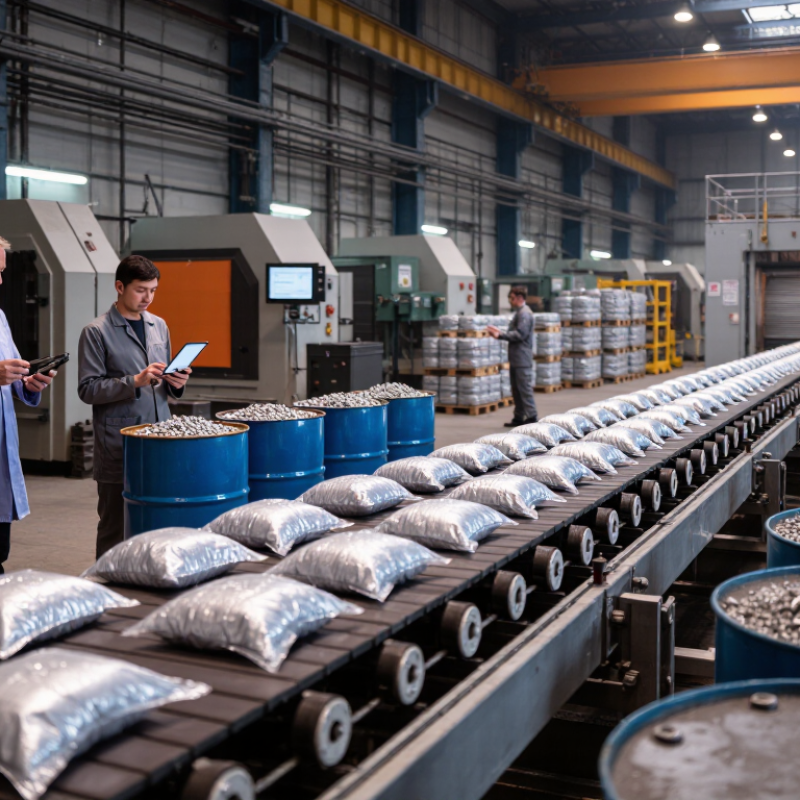
2026 Top Ferro Silicon Magnesium Suppliers for Global Buyers
What Is Ferro Silicon Magnesium and Why Does It Matter?
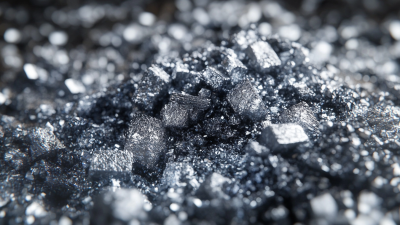
Ferro silicon magnesium is a master alloy used to produce ductile iron. It usually contains magnesium, silicon, calcium, and sometimes rare earth elements. During treatment, magnesium changes graphite into compact spheroids. This improves ductility, toughness, and fatigue resistance.
The material matters because dosing errors can create pinholes, carbides, or unstable graphite shapes. ISO 1083:2019 links ductile iron performance with graphite form, matrix structure, and mechanical properties. Global metal demand also provides context. The World Steel Association reported about 1.88 billion tonnes of crude steel production in 2024. Foundries serving construction, machinery, and transport markets therefore need consistent alloy inputs. However, steel output is not a direct measure of ductile iron demand. That comparison needs caution.
Tips: Ask suppliers for recent batch certificates, magnesium recovery data, particle-size ranges, and sulfur-control guidance. Check whether test results match your furnace conditions. A certificate alone is not enough.
Experienced buyers should compare reaction behavior, not only price per tonne. A lower-cost alloy may produce more slag or require higher additions. Confirm packaging strength, moisture protection, traceability, and delivery reliability. ISO references help, but they do not replace plant trials. Some published market data remains incomplete or inconsistent. That weakness deserves attention before signing a long-term contract.
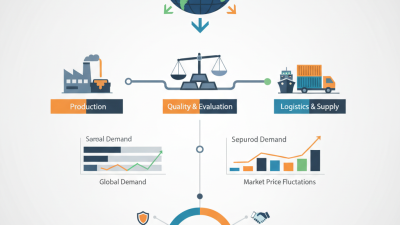
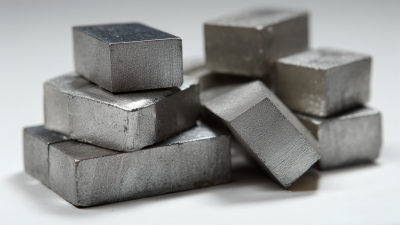
Ferro silicon magnesium is a magnesium-containing ferroalloy used to treat molten iron and produce ductile iron. A typical commercial nodularizer contains approximately 40–45% silicon, 5–7% magnesium, 1–2% rare earth elements, up to 2% calcium, and up to 1% aluminum; iron makes up the balance. Actual specifications vary by grade, application, and supplier.
Ferro silicon magnesium is commonly purchased in grades containing 5–9% magnesium. Silicon often ranges from 40–50%, while calcium, rare earth elements, and aluminum require tighter control. Exact chemistry varies by ductile iron process and nodularizer practice. Buyers should request a written specification before comparing suppliers.
Standards such as ASTM, EN, or ISO can support procurement, but they do not replace batch-level agreement. A reliable certificate should show magnesium, silicon, calcium, rare earth content, aluminum, and iron balance. It should also identify the test method, production batch, sampling date, and laboratory. Numbers without traceability deserve caution.
Particle size affects recovery and feeding behavior. Common sizes include 0.5–3 mm, 1–6 mm, and 5–25 mm lumps. The material should be dry, clean, and free from visible oil, excessive fines, and foreign particles. Moisture control matters during storage and shipment. Sealed bags, strong pallets, and clear lot markings reduce handling problems.
Quality checks should include chemical analysis, size distribution, moisture inspection, and visual review. Independent testing can confirm disputed results. Still, even a complete certificate may miss inconsistent reaction performance. I have seen specifications that looked precise but lacked sampling details. Buyers should evaluate trial results, recovery rates, slag behavior, and casting surface quality. A small production trial is often more informative than a polished sales sheet.
Evaluating a ferro silicon magnesium supplier in 2026 starts with chemistry, not a polished website. Request the latest batch certificate for magnesium, silicon, calcium, rare earths, carbon, and sulfur. Compare declared values with an independent laboratory report. Small differences matter. The World Steel Association’s 2025 statistical release reports about 1.885 billion tonnes of crude steel production in 2024. This scale keeps foundries sensitive to inoculant consistency and delivery risk. USGS Mineral Commodity Summaries 2025 also highlights concentrated supply chains for silicon and magnesium materials. That concentration deserves a serious contingency question.
Check particle size, treatment recovery, packaging strength, and moisture protection. Ask for production dates, furnace controls, retain-sample policies, and traceable lot numbers. A 25-kilogram bag with a weak inner liner can absorb moisture during port storage. It may then alter treatment performance. Request a small trial shipment before signing a large contract. Review the supplier’s quality system, third-party test frequency, export experience, and response time for nonconformities. ISO 9001 certification helps, but it does not replace test evidence. I would also compare delivered cost, not only the quoted tonne price. Freight, inspection, customs delays, and rejected material can quietly change the calculation. My own evaluation would remain cautious: one successful trial cannot prove stable performance across every furnace, season, or alloy grade.
| Evaluation Category | Buyer-Focused Metric | Reference Benchmark for 2026 Procurement | Recommended Evidence | Suggested Weight | Risk Signal | Commercial Importance |
|---|---|---|---|---|---|---|
| Chemical Composition | Magnesium content | Confirm the contractual grade, commonly selected within approximately 5–10% Mg for ductile iron treatment alloys. | Recent batch certificate, independent laboratory report, and tolerance limits stated in the purchase specification. | 15% | Only nominal values are provided; no minimum, maximum, or sampling method is defined. | Directly affects treatment calculations, recovery expectations, and final nodularity. |
| Chemical Composition | Silicon content | Many commercial FeSiMg grades use approximately 40–50% Si; the buyer should specify the exact grade and permitted deviation. | Heat-by-heat chemical analysis with laboratory method and lot traceability. | 10% | Silicon is described as “high” or “low” without a numerical range. | Influences inoculation balance, alloy addition calculations, and melt chemistry. |
| Chemical Composition | Rare-earth and calcium control | Rare-earth and calcium levels vary by application; values should be selected according to sulfur level, base iron chemistry, and casting design rather than by a generic target. | Full elemental analysis covering RE, Ca, Al, Ti, Mn, and other buyer-specified residuals. | 10% | Only Mg and Si are reported while modifier elements are omitted. | Controls reaction behavior, graphite morphology, fading tendency, and inclusion risk. |
| Physical Quality | Particle-size distribution | Specify the treatment process before ordering. Common commercial fractions include screened granules or lumps, but the required size depends on converter, ladle, tundish, or cored-wire practice. | Sieve analysis, agreed size tolerance, fines percentage, and photographs of representative lots. | 10% | Broad size descriptions are used without sieve results or acceptable fines limits. | Determines dissolution rate, reaction control, dust generation, and metal recovery. |
| Consistency | Lot-to-lot stability | Use a documented control plan with retained samples and trend data. A practical buyer target is consistent compliance with the agreed specification over repeated shipments. | At least three recent batch certificates, control charts, nonconformance records, and corrective-action procedure. | 15% | Certificates are identical across lots or cannot be linked to production batches. | Stable chemistry reduces process adjustments and unplanned casting defects. |
| Quality Management | Quality-system control | Prefer a documented quality-management system, calibrated testing equipment, controlled sampling, and traceable inspection records. | Current quality certificate, audit summary, calibration records, inspection plan, and complaint-response procedure. | 10% | Quality claims cannot be supported by current records or verifiable procedures. | Improves accountability, repeatability, and supplier qualification confidence. |
| Supply Capability | Production and allocation capacity | Assess capacity against the buyer’s annual demand, peak-month requirement, minimum order quantity, and replenishment schedule. | Capacity statement, production lead-time history, inventory policy, and written allocation plan for contracted volume. | 10% | Capacity is stated only as a large annual number with no shipment history or allocation commitment. | Protects foundries from interruptions and emergency spot purchasing. |
| Logistics | Export readiness and lead time | Compare quoted transit time, port options, packaging, dangerous-goods assessment where applicable, and agreed Incoterms® 2020 responsibilities. | Pro forma invoice, packing specification, export documents, shipment history, and delivery-performance records. | 10% | Lead time excludes production, port handling, customs, or document preparation. | Reduces landed-cost uncertainty and production planning risk. |
| Packaging | Moisture and contamination protection | Packaging should prevent water ingress, cross-contamination, excessive breakage, and identification loss during storage and ocean transport. | Packaging drawings, pallet or bag specifications, moisture-control procedure, and loading photographs. | 5% | Unsealed packaging, unclear net weight, or missing lot identification. | Maintains alloy usability and simplifies warehouse traceability. |
| Technical Support | Application and trial support | Supplier should be able to support trial planning, addition-rate calculations, sampling, reaction control, and corrective actions without replacing the foundry’s own process validation. | Technical data sheet, trial protocol, response-time commitment, and documented case-based troubleshooting method. | 5% | Technical support is limited to a sales brochure or generic product description. | Accelerates qualification and lowers start-up risk for new grades or processes. |
| Total Cost | Landed cost per effective treatment result | Evaluate product price together with Mg recovery, required addition rate, freight, duties, packaging, rejection risk, and handling cost. | Comparable landed-cost model using trial results and a clearly defined delivery basis. | 10% | The lowest quoted price is compared without considering recovery, chemistry variation, or logistics. | Provides a more accurate comparison than price per metric ton alone. |
| Compliance | Documentation and responsible sourcing | Confirm applicable export, customs, workplace-safety, environmental, and material-disclosure requirements in the destination market. | Safety data sheet, product declaration, origin documentation, applicable conformity records, and customer-specific compliance forms. | 5% | Documents are outdated, inconsistent, untranslated where required, or unavailable before shipment. | Reduces customs delays, workplace exposure concerns, and compliance disputes. |
In 2026, ferro silicon magnesium supply remains concentrated in China, India, and parts of Central Asia. China offers broad production capacity and flexible alloy grades. India is increasingly attractive for buyers seeking competitive pricing and diversified shipping routes. Central Asian suppliers may provide useful access to regional raw materials, but transport planning requires more attention.
Global buyers should examine magnesium content, silicon range, particle size, and recovery performance. A certificate alone is not enough. Ask for recent batch analysis, sampling procedures, and furnace trial data. Moisture control also matters. Damp nodules can create handling problems and distort weight calculations.
Port location can change the real purchase cost. Compare inland trucking, container availability, customs preparation, and seasonal congestion. Buyers should also confirm packaging strength, labeling accuracy, and storage recommendations before signing contracts. Smaller trial orders often reveal inconsistent sizing or delayed documents. That lesson is easy to overlook.
Supplier reliability depends on more than price. Review production capacity, quality records, response speed, and contingency plans. Independent inspection may be worthwhile for large shipments. Still, inspection cannot replace clear specifications. Some buyers focus too heavily on certificates and ignore actual furnace results. That is a mistake worth reconsidering. Clear communication, realistic lead times, and transparent claims support safer long-term sourcing.
Reliable purchasing begins with a precise specification, not a supplier ranking. State silicon, magnesium, calcium, particle size, moisture limit, and acceptable variation. Ask suppliers for recent certificates of analysis, production dates, batch numbers, and traceable origin documents. A clear purchase order prevents costly assumptions. It should also define packaging, labeling, Incoterms, payment stages, and rejection procedures.
Inspection needs practical control. An independent inspector can sample several bags from different pallet positions. Check weight, surface condition, lumps, moisture, and visible contamination. Compare laboratory results with the agreed specification. Keep sealed samples for later disputes. Photos should show pallets, markings, container interiors, and seal numbers. Do not rely only on a supplier’s internal report. It may be accurate, but independent verification reduces uncertainty.
Logistics planning should consider humidity and handling damage. Use dry, strong bags with inner liners when appropriate. Confirm container cleanliness before loading. Request loading records and shipping documents before departure. Compliance files may include the commercial invoice, packing list, certificate of origin, safety data sheet, and applicable customs classification. Requirements differ by destination, so a local customs professional should review them. A perfect checklist does not exist. Buyers sometimes overlook small label details or assume transit insurance covers every loss. That gap deserves a final review before shipment.