2026 Top Silicon Carbide Mosfet Applications and Trends?
In recent years, the demand for Silicon Carbide Mosfet technology has surged. As industries strive for higher efficiency, this material shows great promise. Industry expert Dr. Emily Chen stated, "Silicon Carbide Mosfets are revolutionizing power electronics with their efficiency and thermal performance." The versatility of Silicon Carbide Mosfets makes them appealing across various sectors.
Silicon Carbide Mosfæts are gaining traction in electric vehicles, renewable energy systems, and more. Their ability to withstand high voltage and temperature allows for smaller, lighter designs. This development brings new opportunities but also challenges. Not all applications may fully leverage their potential. Some manufacturers face issues in scaling production efficiently.
As we approach 2026, understanding industry trends becomes crucial. The growth trajectory of Silicon Carbide Mosfets depends on technological advancements and market demand. Reflection on the current status is necessary. Innovations must address drawbacks to enhance market adoption. Ultimately, the future of Silicon Carbide Mosfets holds both promise and uncertainties.

2026 Trends in Silicon Carbide MOSFET Technology Development
Silicon carbide (SiC) MOSFET technology is evolving rapidly. By 2026, it is set to revolutionize various industries. The trend is toward higher voltage and power efficiency. This shift is driven by the need for energy efficiency in electric vehicles and renewable energy systems. SiC devices facilitate higher switching frequencies, leading to smaller and lighter designs.
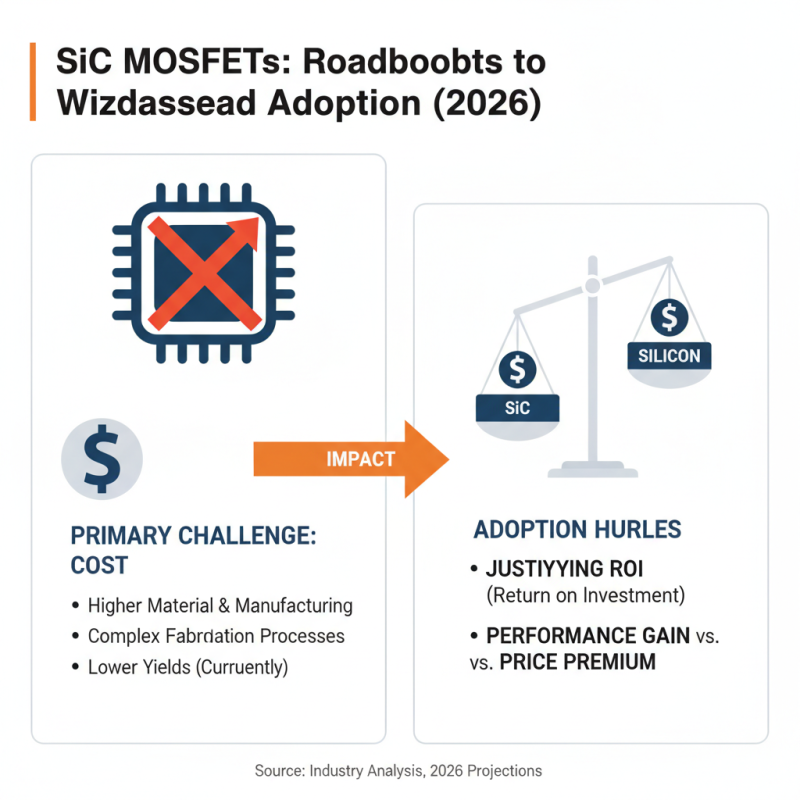
New manufacturing techniques enhance the performance of SiC MOSFETs. However, challenges remain. The cost of production can be a barrier. Not every application can justify this expense yet. Additionally, the thermal management of these devices needs improvement. As they operate at higher temperatures, reliability may suffer without innovative cooling solutions.
The demand for SiC technology continues to grow. Industries are increasingly aware of its benefits. Despite the hurdles, the momentum is unmistakable. Engineers and researchers are exploring new designs. Collaboration between sectors may pave the way for breakthroughs. The future of SiC MOSFETs holds promise, but it demands continued efforts and critical thinking.
2026 Top Silicon Carbide MOSFET Applications and Trends
| Application Area |
Growth Rate (%) |
Market Share (%) |
Key Drivers |
| Electric Vehicles |
25 |
35 |
Government incentives, Environmental regulations |
| Renewable Energy Systems |
30 |
30 |
Shift towards clean energy, Cost reductions |
| Industrial Automation |
15 |
20 |
Increased efficiency, Demand for smart factories |
| Data Centers |
20 |
15 |
Growing data consumption, Need for energy efficiency |
| Consumer Electronics |
10 |
10 |
Miniaturization trends, Enhanced performance |
Key Industries Adopting Silicon Carbide MOSFETs in 2026
In 2026, the adoption of Silicon Carbide (SiC) MOSFETs is expected to surge across several key industries.
The power electronics market is projected to grow significantly, with SiC devices expected to capture a notable share.
Reports indicate that the automotive sector will lead this trend, driven by the increasing demand for electric vehicles (EVs).
SiC MOSFETs enable higher efficiency and power handling, essential for EV performance.
Renewable energy is another industry embracing SiC technology.
Solar inverters and wind turbines benefit from SiC’s efficiency and thermal performance.
According to industry analysts, the renewable energy sector is likely to contribute over 25% to the total SiC MOSFET market by 2026.
Nevertheless, challenges remain. The high initial cost of SiC devices compared to traditional silicon remains a concern for some manufacturers.
Additionally, the industrial automation sector is adopting SiC MOSFETs for their superior switching speeds.
As factories increasingly turn to automation, the need for efficient power management systems grows.
However, technical hurdles regarding supply chain logistics and compatibility with existing systems must be addressed.
Without resolving these issues, growth may stall, highlighting a critical reflection for industry players moving forward.
Performance Improvements in 2026 Silicon Carbide MOSFET Applications
Silicon Carbide (SiC) MOSFETs are gaining traction. They offer significant performance improvements in 2026. A recent report forecasts a market growth of 20.5% annually for SiC technology. This is driven by needs in renewable energy and electric vehicles.
Performance enhancements include higher efficiency and thermal management. SiC MOSFETs can operate at greater temperatures than traditional silicon. Many power systems benefit from reduced energy losses. For example, the switch from silicon to SiC can cut power loss by up to 50%. This has a massive impact on overall system performance.
However, challenges persist. The cost of SiC devices remains high compared to silicon alternatives. Manufacturers are still finding ways to lower production costs. There are also concerns about reliability under extreme conditions. Addressing these issues is critical for widespread adoption. Industry experts agree that ongoing research will help resolve these hurdles.
2026 Top Silicon Carbide MOSFET Applications and Trends
Future Outlook for Silicon Carbide MOSFET Market Dynamics in 2026
The silicon carbide (SiC) MOSFET market is evolving rapidly. By 2026, a surge in demand is anticipated, driven by sectors like renewable energy and electric vehicles. These applications require efficient power management. SiC MOSFETs are ideal for high-voltage and high-temperature environments. The increasing push for energy efficiency will likely dominate discussions.
Trends in 2026 suggest a growing emphasis on sustainability and performance. Companies are exploring SiC's benefits for reducing energy loss. More engineers are integrating SiC technology into their designs. However, challenges remain. High production costs and material availability can hinder progress. This prompts a reflection on balancing innovation with economic viability.
As the market expands, new players are entering the field. This could lead to a more dynamic landscape. Yet, the risk of oversaturation looms. Some businesses may struggle to differentiate themselves. Ongoing research in SiC technology is crucial to overcoming these hurdles. It will shape the future direction of the market.