Top Benefits of Silicon Carbide Semiconductors for Global Buyers?
The silicon carbide semiconductor industry is rapidly evolving, attracting global buyers with its unique advantages. According to a report from ResearchAndMarkets, the silicon carbide semiconductor market is projected to grow at a CAGR of 30.7% from 2022 to 2030. This growth highlights the increasing demand for efficient, high-performance solutions in power electronics.
Experts like Dr. Lisa Chen, a leading figure in semiconductor technology, emphasize the benefits of silicon carbide. She states, "Silicon carbide semiconductors improve energy efficiency and thermal management in various applications." These attributes make them ideal for electric vehicles and renewable energy systems. Buyers are keenly aware of these advantages, seeking to leverage them in competitive markets.
Despite the benefits, there are challenges that warrant reflection. The initial costs of silicon carbide devices can be higher than traditional silicon options. However, the long-term savings in energy consumption often outweigh these upfront costs. As global buyers navigate this landscape, understanding both the potential and the pitfalls of silicon carbide semiconductor technology becomes essential for making informed decisions.

Key Characteristics of Silicon Carbide Semiconductors
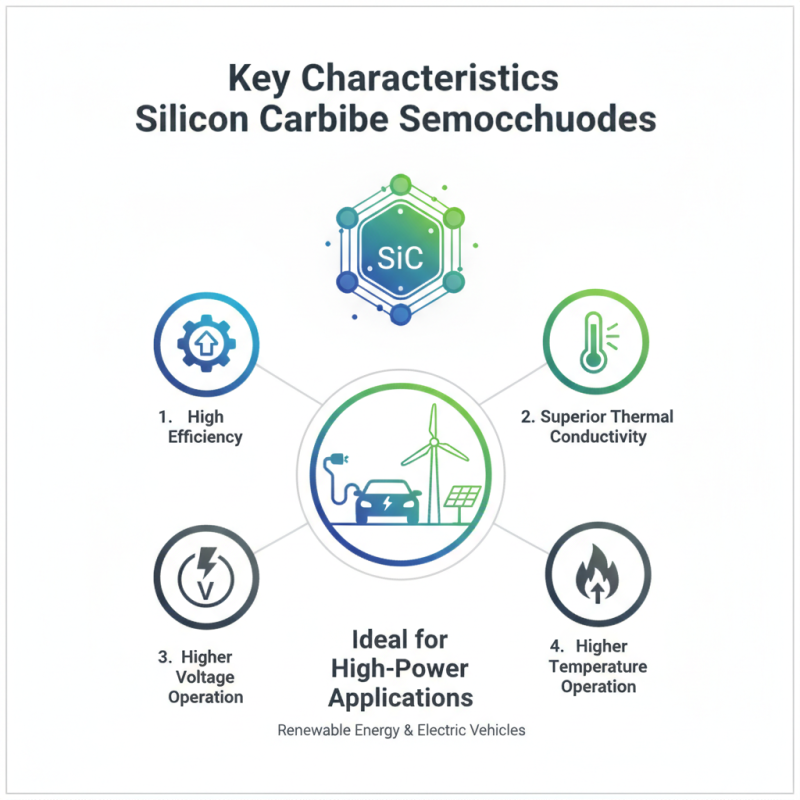
Silicon carbide (SiC) semiconductors are at the forefront of modern electronics. They offer high efficiency and superior thermal conductivity. This makes them ideal for high-power applications. These semiconductors can operate at higher voltages and temperatures compared to traditional silicon ones. This characteristic is crucial in many industries, especially in renewable energy and electric vehicles.
When considering SiC semiconductors, ensure you assess their heat management capabilities. This will directly impact your system's longevity and performance. Overheating can lead to failures, affecting productivity. Additionally, evaluate the switching speeds of SiC devices. Faster switching can lead to more efficient energy use.
Tips: Always check the datasheets for thermal ratings. This information can guide your application design. Remember that while SiC offers many advantages, it also comes with challenges. Their production can be more complex, leading to higher costs. Balancing performance with budget is essential in your decision-making process.
Advantages of Silicon Carbide Over Traditional Semiconductors
Silicon carbide (SiC) semiconductors are making waves in the electronics industry. They offer superior thermal conductivity, which means devices can operate at higher temperatures. This is crucial for applications like electric vehicles and renewable energy systems. As industries push for efficiency, SiC proves to be a robust solution.
In contrast to traditional silicon-based semiconductors, SiC devices allow for faster switching speeds. This leads to reduced energy losses in power conversion. The higher breakdown voltage of SiC enables it to handle more power. However, not all devices are suitable for SiC technology. Its production can be more challenging and expensive, raising questions about scalability.
Despite these challenges, the benefits are compelling. The increase in efficiency can lead to longer device lifespans. While the transition to SiC may seem daunting, the long-term advantages are worth considering. Buyers must weigh the initial costs against potential savings over time. Adopting SiC technology could redefine how we think about energy performance in electronics.
Top Benefits of Silicon Carbide Semiconductors
Applications of Silicon Carbide in Various Industries
Silicon carbide (SiC) semiconductors are gaining traction across various industries. They offer significant advantages over traditional silicon materials. Their ability to operate at higher voltages and temperatures makes them ideal for demanding environments. For instance, the electric vehicle (EV) market is expected to reach $800 billion by 2027, with SiC playing a pivotal role in powering these vehicles efficiently.
In the renewable energy sector, SiC devices enhance the performance of inverters for solar and wind power systems. Reports indicate that SiC can improve efficiency by about 20%. This efficiency translates to lower energy costs and increased adoption of sustainable technologies. However, the initial investment in SiC technology remains a hurdle for some companies.
Another area of impact is industrial automation. The use of SiC in motor drives can reduce energy consumption significantly. Research suggests that integrating SiC could lead to power savings of up to 30%. Yet, the transition requires skilled personnel familiar with SiC technology. Companies must address this gap to fully leverage the benefits.
Cost Implications for Global Buyers of Silicon Carbide Products
Silicon carbide (SiC) semiconductors are revolutionizing the electronics market. For global buyers, the cost implications of SiC products can vary significantly. While the initial investment may seem high, the long-term benefits often justify this expense. SiC devices typically offer superior efficiency and performance compared to traditional silicon-based alternatives. This can lead to substantial energy savings and lower operational costs over time.
It's essential to analyze the total cost of ownership. Consider the efficiency gains and potential reductions in cooling and energy expenses. These factors can influence overall savings significantly. Buyers should scope the long-term advantages against upfront costs for informed decisions.
Tip: Research different applications of SiC semiconductors. Each application might come with unique benefits that impact cost-effectiveness.
Pricing for silicon carbide products can be affected by global supply chains. Fluctuations in material costs may impact final prices. This unpredictability can pose challenges for budget planning.
Tip: Engage with multiple suppliers to understand market dynamics. Building relationships can provide insights into best pricing strategies over time.
Being aware of these implications helps global buyers navigate their purchasing effectively. Weighing immediate costs against future benefits is crucial for maximizing investments in silicon carbide technology.
Future Trends in Silicon Carbide Semiconductor Technology
Silicon carbide (SiC) semiconductors are emerging as vital components in modern electronics. As technology evolves, the demand for higher efficiency and performance is growing. SiC wafers, known for their excellent thermal conductivity and high breakdown voltage, are at the forefront of this change. They enable devices to operate at higher temperatures and voltages, making them perfect for electric vehicles and renewable energy applications.
Looking ahead, there are several trends shaping the future of SiC technology. The shift towards electric mobility is driving the need for lighter and more efficient components. Automotive industries are increasingly adopting SiC solutions for power electronics, improving range and energy efficiency. Additionally, advancements in manufacturing processes are likely to lower costs and increase production scalability. This will allow for more widespread application across various sectors.
However, challenges remain. The initial investment in SiC technology can be high, which may deter smaller companies. Furthermore, there is a learning curve for engineers transitioning from traditional silicon semiconductors to SiC systems. As the market grows, addressing these obstacles will be crucial. Overall, silicon carbide semiconductors are set to play an essential role in the future of electronics, driven by evolving technologies and market demands.