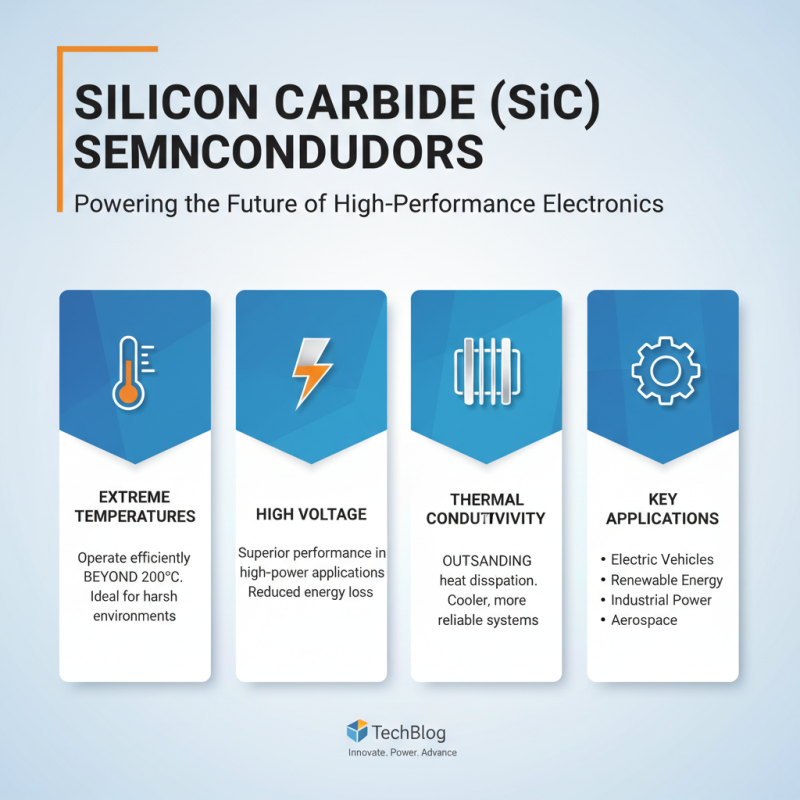
Silicon Carbide Semiconductors are gaining attention for their unique advantages. As Dr. Emily Carter, an expert in semiconductor technology, states, "Silicon Carbide enables a new era in electronic efficiency." These materials have remarkable thermal and electrical properties. They are ideal for high-voltage applications.
Many industries benefit from Silicon Carbide Semiconductors. They enhance electric vehicle performance and improve renewable energy systems. However, challenges remain. The production process can be complex and costly. Some argue that not all applications are suited for Silicon Carbide. Selecting the right context is crucial.
Despite these hurdles, the potential of Silicon Carbide is undeniable. It paves the way for advanced technologies. Innovators are exploring its full capabilities. As the industry evolves, ongoing research will address its limitations. The future looks promising, yet caution is warranted in its adoption.

Silicon carbide (SiC) semiconductors have gained attention for their unique properties. They excel in high-temperature and high-voltage environments. SiC can operate efficiently beyond 200°C, making them ideal for extreme conditions. Their thermal conductivity is outstanding, contributing to better heat dissipation compared to traditional materials.
Moreover, the efficiency of SiC devices is noteworthy. They switch faster than silicon-based components, which reduces energy loss. This speed enhances performance in power electronics. However, manufacturing processes can be complex and expensive.
SiC also offers robustness. It withstands radiation much better than silicon. This quality is essential for aerospace applications. Still, challenges remain. The costs and fabrication techniques need improvement. Investing in research may offer solutions for these issues in the future.

Silicon carbide (SiC) is revolutionizing power electronics. Its unique properties, like high thermal conductivity and electric field strength, enable smaller, more efficient devices. In industrial applications, SiC is rapidly becoming a preferred choice. According to a report by the MarketsandMarkets, the SiC semiconductor market is projected to reach $3.59 billion by 2026, growing at a CAGR of 18.5%. This growth reflects its rising importance in power conversion systems.
Key applications of SiC include electric vehicles (EVs) and renewable energy systems. In EVs, SiC devices enhance efficiency, reducing charging times. They also improve the range by optimizing the powertrain. For renewable energy, SiC’s ability to handle high voltages makes it suitable for wind and solar inverters. These inverters convert energy effectively, contributing to a greener future.
Tip: When considering SiC solutions, assess your specific needs. Not every application will benefit equally from its use. It is essential to analyze the trade-offs. SiC semiconductors initially appear more expensive than traditional silicon options. However, their long-term efficiency and durability often justify the investment. A careful, reflective approach can lead to the best outcomes in this rapidly evolving field.
Silicon carbide (SiC) is changing the semiconductor landscape. Its unique properties offer remarkable advantages over traditional silicon semiconductors. SiC devices can operate at higher temperatures, making them ideal for harsh environments. They also handle higher voltages, which is critical in power applications.
SiC semiconductors provide better efficiency. This leads to reduced energy loss during operation. Most SiC components convert more energy into usable power. This efficiency is vital for renewable energy sources and electric vehicles, where every watt counts.
**Tip:** Consider your energy needs. Switching to SiC solutions might reduce your energy consumption significantly.
Durability is another advantage. SiC materials are more resistant to breakdown. They have a lower failure rate than silicon under extreme conditions. However, adapting to SiC can require changes in system design. Users must consider integration challenges.
**Tip:** Plan ahead when transitioning to SiC technology. A detailed assessment ensures smooth integration and optimal performance.
Silicon carbide (SiC) plays a pivotal role in advancing renewable energy technologies. Its unique properties significantly enhance the performance of systems like solar inverters and electric vehicle chargers. The high thermal conductivity and efficiency of SiC devices lead to reduced energy loss. This efficiency is crucial as the world shifts toward cleaner energy sources.
However, the transition to SiC is not without challenges. The manufacturing process can be complex and costly. Companies must consider these factors before scaling up production. This complexity may hinder broader adoption in some markets. Still, many experts believe that the long-term benefits, such as better energy conversion rates, outweigh the initial hurdles.
Moreover, SiC's ability to withstand high temperatures and voltages makes it ideal for wind turbine systems. It enables more compact designs, which can reduce the overall footprint of renewable energy installations. In many cases, optimizing these designs can lead to improvements in energy efficiency. Yet, more research is needed to fully understand the long-term implications of integrating SiC into various technologies. Addressing these gaps could unlock even greater potential in renewable energy sectors.
Silicon carbide (SiC) semiconductors are revolutionizing the electronics landscape. They offer greater efficiency and thermal performance. Their ability to operate in high-temperature environments makes them ideal for various applications. From electric vehicles to renewable energy systems, the future is bright for SiC technology. However, challenges remain in manufacturing processes. Achieving high purity and quality can be difficult.
Innovations in SiC are emerging rapidly. Researchers are exploring new materials and designs to enhance performance further. The integration of advanced manufacturing techniques may lower costs. These trends could accelerate the adoption of SiC in more consumer products. Nonetheless, there are hurdles in scalability. Many manufacturers still face obstacles in transitioning from traditional silicon to SiC.
The future of SiC semiconductors looks promising but complex. Industry players must navigate ongoing research and development challenges. Collaboration between sectors may yield breakthroughs. This synergy could lead to faster advancements in SiC applications. The potential is immense, but awareness of limitations is crucial for sustainable growth.
| Application | Benefits | Future Trends |
|---|---|---|
| Electric Vehicles | Increased efficiency and longer range | Integration with advanced battery technologies |
| Renewable Energy | Enhanced power conversion efficiency | Smart grid technology adoption |
| Industrial Automation | Improved reliability and reduced downtime | Increased AI integration in processes |
| Aerospace | Lightweight and high-temperature performance | Emergence of new materials and designs |
| Data Centers | Reduced energy consumption | Growing demand for high-performance computing |
| Telecommunications | Higher frequency operation and efficiency | 5G deployment and expansion |
| Medical Devices | Compact size and enhanced performance | Advancements in portable diagnostic tools |
| Power Supplies | Higher power density and efficiency | Shift towards greener technology |
| Consumer Electronics | Improved battery life and performance | Integration of smart features in devices |
| Transportation Systems | Enhanced efficiency and sustainability | Growth in electric and automated public transport |