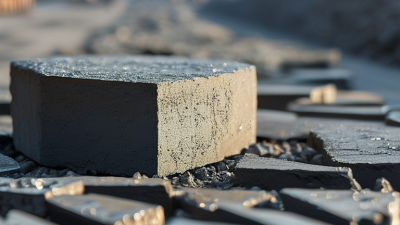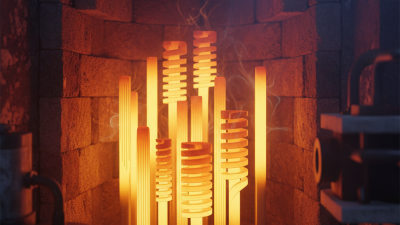
China remains a major production base for silicon materials, serving foundries, chemical processors, solar manufacturers, and advanced powder users. This article examines China’s Top 10 Silicon Metal Powder Manufacturers in 2026 through practical and verifiable criteria. The review considers product purity, particle-size control, furnace sourcing, milling technology, packaging, and quality documentation.
A reliable supplier should provide recent test reports, clear chemical specifications, and traceable batch numbers. Buyers may also need customized mesh ranges, low-oxygen grades, or stable performance under repeated processing. These details matter when Silicon Metal Powder enters aluminum alloys, silicone production, thermal materials, or laboratory formulations. Small differences can affect the final product.
The selection also reviews manufacturing experience, inspection procedures, delivery capacity, and communication quality. Certifications can support confidence, but they should not replace independent verification. Ask for samples. Compare the data carefully. Factory photographs alone prove little. Some rankings may remain imperfect because production capacity and export performance can change during 2026. That limitation deserves attention.
Rather than treating company size as the only advantage, this guide focuses on measurable value and practical cooperation. It highlights manufacturers that appear capable of meeting consistent technical requirements while recognizing that every application has different tolerances. Readers should confirm current specifications, applicable standards, and shipping conditions before placing an order. Reliable purchasing begins with evidence, not impressive wording.
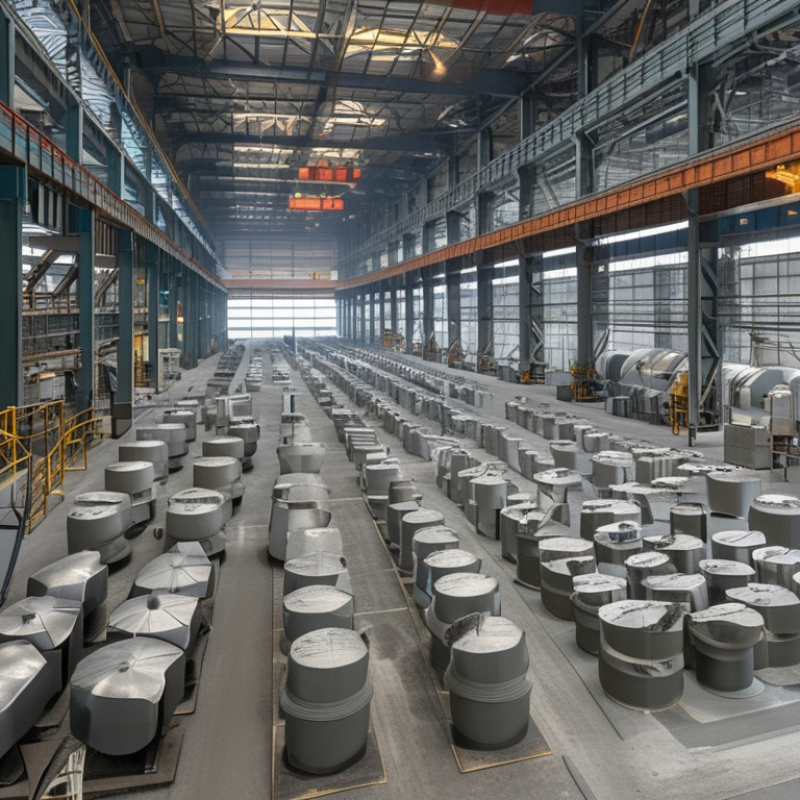
Silicon metal powder is finely milled elemental silicon, usually produced from silicon metal through crushing, screening, and controlled classification. Its gray particles may appear dull, yet their chemistry is highly active in industrial processing. The USGS Mineral Commodity Summaries 2025 estimated global silicon production at about 3.6 million metric tons in 2024. China accounted for most reported output, showing the scale of this supply chain.
The powder has a Mohs hardness near 7, a density of about 2.33 g/cm³, and a melting point near 1,414°C. Particle size changes its behavior. Finer grades offer faster reaction rates and larger surface areas, while coarse grades usually handle more easily. This difference matters. Powder handling also requires dust-control measures, suitable ventilation, and careful storage, because combustible dust can create serious workplace hazards. Technical safety data should guide every operation.
Its main uses include aluminum alloy production, silicone manufacturing, polysilicon feedstock, and specialized refractory or metallurgical applications. In aluminum alloys, silicon can improve castability and reduce shrinkage. In silicone production, it supports materials used in sealants, elastomers, and protective coatings. The International Energy Agency reported that solar photovoltaic deployment passed 400 GW of global additions in 2024, reinforcing demand across the wider silicon value chain. However, powder demand does not rise perfectly with solar capacity. Grades, purity, and particle distribution differ widely. That detail is easy to overlook. Industry statistics also vary by reporting method, so buyers should verify certificates, test methods, and lot consistency rather than rely on headline figures.
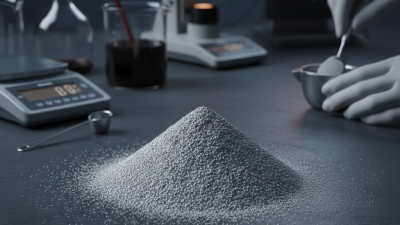
China’s top 10 silicon metal powder manufacturers in 2026 should be ranked by evidence, not publicity. A practical evaluation starts with powder purity, particle-size consistency, and production capacity. Test results should come from recent, independent laboratory reports. Batch records also matter because small variations can affect alloys, solar materials, and chemical processing.
Experienced buyers should examine technical data beyond headline percentages. Important checks include oxygen content, moisture control, surface treatment, packaging strength, and delivery performance. Factory audits can reveal whether quality controls operate daily or only during inspections. Reliable manufacturers provide traceable batch numbers and clear certificates. However, no ranking is perfect. Public data may be incomplete, and some performance claims still require direct verification.
Tips: Request three recent batches. Compare particle-size curves, not only average values. Ask how rejected material is handled. Confirm production capacity during peak seasons. A small sample test can expose problems early. Buyers should also review complaint records and response times. These details often separate a dependable supplier from a persuasive one. Price deserves attention, but it should not outweigh stable quality, documented expertise, and practical after-sales support.
China’s Top 10 Silicon Metal Powder Manufacturers in 2026 will compete through quality, consistency, and traceability. China remains the leading production base. The U.S. Geological Survey’s Mineral Commodity Summaries 2025 estimated China produced about 4.6 million metric tons of silicon in 2024, near four-fifths of global output. This scale supports competitive supply, but it does not guarantee stable powder quality.
Solar, aluminum, chemical, and battery applications are increasing performance demands. The International Energy Agency reported global solar photovoltaic additions of about 420 gigawatts in 2023. That growth strengthens interest in controlled silicon feedstock and finer powders. Experienced buyers should check particle-size distribution, oxygen content, iron levels, moisture, and batch-to-batch consistency. A practical audit should include production records, laboratory certificates, packaging photos, and retained samples. One test is not enough.
Tips: Request D50 data and full sieve results. Confirm whether testing uses internal or independent laboratories. Review the supplier’s response to rejected batches. In my view, rankings can mislead when they rely only on capacity or export volume. A smaller plant may control powder variation better. However, that assumption also needs evidence. Buyers should compare three recent batches before making a 2026 sourcing decision.
China’s top silicon metal powder manufacturers in 2026 should be judged by product consistency, not rankings alone. Buyers usually compare grades by silicon purity, particle size, iron content, aluminum content, and calcium limits. Common applications require different specifications. Finer powder may suit advanced ceramics, while coarser grades can support metallurgical processing. Particle shape matters too.
Production standards should be documented clearly. Reliable factories normally operate under structured quality systems, such as ISO 9001, while aligning contract requirements with applicable GB/T, ASTM, or ISO methods. Each batch should include a certificate of analysis, lot number, production date, and test method. Packaging also deserves attention. Moisture-resistant bags, sealed liners, and dry storage help prevent oxidation and contamination.
Quality control should begin with raw material inspection. Technicians can use laser diffraction for particle distribution and ICP testing for metallic impurities. Sieve analysis remains useful for routine verification. Samples should come from several points in a lot, not only from the surface. That detail is often overlooked. Traceability records should connect the sample to mixing, milling, screening, and packing stages.
No system is perfect. A supplier may meet average purity while showing unstable fine-particle content. Buyers should request retained samples and compare results with independent testing. Factory audits, equipment maintenance records, and corrective-action reports reveal more than polished brochures. Experienced procurement teams also test performance in their own process, because laboratory compliance does not always guarantee production stability.
How to Select a Reliable Silicon Metal Powder Manufacturer
Choosing a silicon metal powder manufacturer requires more than comparing quoted prices. Start by defining purity, particle size, oxygen content, and intended application. A reliable supplier should provide recent batch data, not a generic certificate. Check results for silicon content, iron, aluminum, calcium, moisture, and oxygen. Independent testing methods, such as ICP-OES and laser particle-size analysis, improve confidence.
Ask for a small sample before placing a large order. Examine its color, flow, agglomeration, and sieve residue. Particle size can affect mixing, reaction speed, and final product consistency. Request a clear specification sheet and traceability code for every batch. Production records should connect raw materials, processing dates, and inspection results. Useful evidence matters.
Visit the facility when possible, or arrange a live video audit. Observe dust-control systems, sealed packaging, laboratory equipment, and storage conditions. ISO 9001 certification is helpful, but it should not replace practical verification. Confirm monthly capacity, minimum order quantity, lead time, and export packaging. Moisture-proof bags and strong outer cartons reduce transit risk. A supplier that answers technical questions precisely is usually safer than one offering vague assurances.
I once treated a low price as a strong advantage. That judgment was incomplete. A delayed shipment or unstable particle distribution can cost more than the original saving. Review corrective-action records, communication habits, and after-sales support. The best choice may not be the cheapest; it should be measurable, responsive, and consistent.
| Rank | Anonymous Supplier Profile | Recommended Grade | Silicon Content | Maximum Fe | Maximum Al | Maximum Ca | Typical Particle Size | Production and Processing Capability | Quality-Control Evidence to Request | Typical Packaging | Indicative Lead Time | Best-Fit Application |
|---|---|---|---|---|---|---|---|---|---|---|---|---|
| 1 | High-Purity Micronizing Specialist | 2202 / 3303 | ≥99.30–99.58% | ≤0.20–0.30% | ≤0.20–0.30% | ≤0.02–0.03% | D50: 10–45 μm; custom cuts available | Crushing, air classification, magnetic separation, and controlled micronizing | Batch COA, sieve or laser-particle-size report, XRF results, moisture result, and retained sample | 25 kg moisture-barrier bags; 500–1,000 kg jumbo bags by agreement | 7–20 working days after specification approval | Advanced ceramics, specialty alloys, and high-purity chemical processing |
| 2 | Low-Iron Metallurgical Powder Supplier | 441 / 3303 | ≥99.00–99.30% | ≤0.30–0.40% | ≤0.30–0.40% | ≤0.03–0.10% | D50: 20–75 μm | Water-cooled crushing and multi-stage screening for narrow particle distribution | Current COA, monthly third-party test, lot traceability, and contamination-control procedure | 20–25 kg laminated bags with palletized export packing | 10–25 working days | Aluminum alloys, silicone production, and metallurgical additives |
| 3 | Standard Industrial Powder Producer | 553 | ≥98.50% | ≤0.50% | ≤0.50% | ≤0.30% | D50: 45–150 μm | Jaw crushing, roller milling, screening, and routine magnetic separation | COA for every lot, basic sieve analysis, packaging inspection, and production-date traceability | 25 kg woven bags with inner liner; jumbo bags for bulk orders | 7–15 working days | General foundry, refractory, alloying, and industrial chemical applications |
| 4 | Fine Powder and Narrow-Distribution Supplier | 441 / 3303 | ≥99.00–99.30% | ≤0.30–0.40% | ≤0.30–0.40% | ≤0.03–0.10% | D50: 8–35 μm; D90 typically below 75 μm | Closed-loop air classification, dust collection, and batch blending | Particle-size distribution curve, XRF chemical analysis, moisture data, and cleaning validation | 10–20 kg sealed bags inside fiber drums or cartons | 15–30 working days | Powder metallurgy, thermal spraying, and high-performance ceramics |
| 5 | Large-Volume Export-Oriented Producer | 553 / 441 | ≥98.50–99.00% | ≤0.40–0.50% | ≤0.40–0.50% | ≤0.10–0.30% | D50: 50–180 μm | Integrated crushing, screening, blending, and container-loading operations | Pre-shipment inspection, lot records, loading photographs, COA, and export documentation | 25 kg bags or 1,000 kg jumbo bags; containerized shipment | 10–25 working days, excluding ocean transit | Bulk alloy manufacturing and continuous industrial consumption |
| 6 | Custom-Size Contract Manufacturer | 553 / 441 | ≥98.50–99.00% | ≤0.40–0.50% | ≤0.40–0.50% | ≤0.10–0.30% | 20–500 μm according to approved specification | Screening and milling lines configured for customer-specific mesh ranges | Approved sample, first-article test, sieve report, lot traceability, and change-control notice | 20–25 kg bags, cartons, or jumbo bags depending on particle size | 15–30 working days | Customers requiring non-standard mesh sizes or blended grades |
| 7 | Clean-Processing Specialty Supplier | 3303 / 2202 | ≥99.30–99.58% | ≤0.20–0.30% | ≤0.20–0.30% | ≤0.02–0.03% | D50: 15–60 μm | Dedicated processing area, magnetic separation, and controlled material handling | Foreign-matter inspection, XRF report, particle-size data, moisture test, and cleaning records | Sealed double PE bags in cartons or fiber drums | 15–25 working days | Electronic materials, specialty ceramics, and contamination-sensitive processes |
| 8 | Cost-Competitive Standard Grade Supplier | 553 | ≥98.50% | ≤0.50% | ≤0.50% | ≤0.30% | D50: 75–250 μm | Conventional crushing, milling, and mesh screening for stable standard grades | Lot COA, basic chemical analysis, visual inspection, and packaging-weight verification | 25 kg woven bags with inner liner or 500 kg jumbo bags | 5–15 working days | Price-sensitive industrial applications and routine alloy additions |
| 9 | Small-Batch Development Supplier | 441 / 3303 | ≥99.00–99.30% | ≤0.30–0.40% | ≤0.30–0.40% | ≤0.03–0.10% | D50: 10–100 μm | Flexible milling, laboratory screening, sample blending, and pilot-batch support | Pre-production sample, comparative test data, batch COA, and documented specification approval | 1–25 kg laboratory or pilot quantities; export packing available | 10–30 working days | Research, product development, pilot production, and process qualification |
| 10 | Integrated Smelting-and-Powder Supply Profile | 553 / 441 | ≥98.50–99.00% | ≤0.40–0.50% | ≤0.40–0.50% | ≤0.10–0.30% | D50: 30–200 μm | Integrated silicon production, crushing, screening, blending, and regular replenishment | Smelting-batch traceability, COA, supplier audit, production-capacity confirmation, and complaint procedure | 25 kg bags or 500–1,000 kg jumbo bags | 10–25 working days | Long-term industrial supply contracts and recurring monthly demand |