Why Choose Sintered Silicon Carbide for Advanced Applications?
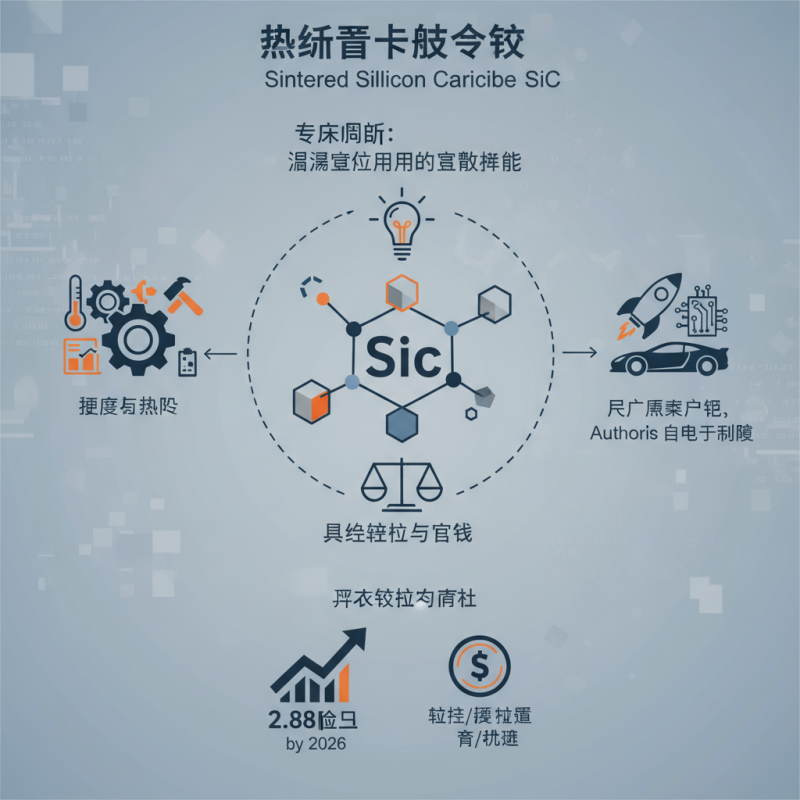
Sintered Silicon Carbide (SiC) has gained a strong foothold in advanced applications. Its remarkable hardness and thermal resistance make it ideal for demanding environments. According to a report by Allied Market Research, the global SiC market is projected to reach 2.88 billion USD by 2026, indicating robust growth potential.
Expert Dr. Emily Carter, a leading authority in materials science, states, "Sintered Silicon Carbide offers unmatched performance for high-temperature applications." This highlights its critical role in industries like aerospace, automotive, and electronics. However, the material's processing costs can be a concern, leading to a careful evaluation of its application suitability.
Despite its advantages, companies must reflect on the challenges of adopting Sintered Silicon Carbide. The initial investment may be significant, and not every application will benefit from its properties. Balancing efficiency and cost remains a consistent struggle. As industries evolve, Sintered Silicon Carbide will likely play a pivotal role, but awareness of its limitations is essential for success.
Understanding Sintered Silicon Carbide: Composition and Properties
Sintered silicon carbide is a remarkable material with unique properties. Its composition mainly consists of silicon and carbon. During the sintering process, particles are fused together at high temperatures. This forms a dense and durable structure. The result is a substance that shows excellent hardness and wear resistance. It can withstand extreme temperatures and pressure without degradation.
This material finds its place in advanced applications. Its lightweight nature does not compromise strength. Many industries use it for components exposed to harsh environments. For example, it is utilized in seals and bearings. However, the manufacturing process can be quite demanding. Precise control over temperature and atmosphere is necessary. Any deviation may lead to flaws in the final product.
The benefits are clear, yet challenges remain. Sintered silicon carbide can be brittle under certain conditions. This characteristic can lead to unexpected failures. Proper engineering and design are essential. Understanding its limitations is critical for successful application. Optimizing usage ensures balance between performance and longevity. Despite the hurdles, the ongoing evolution of this material offers promising advancements.
Applications of Sintered Silicon Carbide in High-Performance Industries
Sintered silicon carbide (SiC) is gaining traction in high-performance industries. Its unique properties make it suitable for various demanding applications. For example, SiC's hardness and thermal stability are critical in the manufacturing of cutting tools. These tools withstand extreme conditions, leading to increased productivity.
In the automotive sector, sintered SiC plays a pivotal role. It resists wear, making it ideal for components in electric vehicles. These components often endure significant stress, thereby benefiting from the strength of SiC. Additionally, SiC’s thermal conductivity helps in efficient heat dissipation, an essential trait for modern engines.
The aerospace industry also relies on sintered silicon carbide. Components made of SiC can handle high temperatures and pressures. This durability is vital for ensuring safety and performance in flight. However, working with this material can be challenging. The sintering process requires precise control and expertise. It is a reminder that advancements in materials come with complexities and required refinements.
Why Choose Sintered Silicon Carbide for Advanced Applications?
| Application Area |
Properties |
Benefits |
Key Industries |
| Aerospace Components |
High strength, corrosion resistance |
Weight reduction, enhanced performance |
Aerospace, Defense |
| Semiconductor Manufacturing |
Low thermal expansion, high thermal conductivity |
Precision processing, reliability |
Electronics, Semiconductor |
| Automotive Brakes |
High wear resistance, thermal shock resistance |
Durability, safety enhancements |
Automotive, Transportation |
| Oil and Gas Exploration |
Chemical resistant, robust mechanical properties |
Extended service life, reduced maintenance |
Oil & Gas, Energy |
| Medical Devices |
Biocompatible, high-strength |
Patient safety, longevity of devices |
Healthcare, Medical Technology |
Advantages of Sintered Silicon Carbide Over Traditional Materials
Sintered Silicon Carbide (SiC) is gaining attention in advanced applications. Its unique properties set it apart from traditional materials. The hard and wear-resistant nature of SiC makes it ideal for high-stress environments. Unlike metals, it does not corrode easily. This can lead to longer-lasting components, reducing the frequency of replacements.
Tips: When selecting materials for tough applications, consider durability over cost. Some buyers overlook this. They may choose cheaper options, resulting in higher long-term expenses.
SiC also withstands extreme temperatures. This makes it suitable for aerospace and automotive industries. Many traditional materials struggle under such conditions, leading to failures. SiC’s ability to maintain integrity at high temperatures is a game-changer. The initial investment may be higher, but the performance often justifies the cost.
However, the manufacturing process for SiC can be complex. There may be inconsistencies that require attention. It’s essential to work with skilled manufacturers to address potential quality issues. Relying on SiC without proper understanding can lead to challenges. It's crucial to reflect on your needs before making a decision.
Challenges and Limitations of Using Sintered Silicon Carbide
Sintered silicon carbide (SiC) has gained traction for its exceptional properties. However, its use is not without challenges. One primary issue is its high cost of production. Reports indicate that the manufacturing expenses can be 30% to 50% higher compared to other ceramics. This creates barriers for widespread adoption in price-sensitive markets.
Another limitation concerns its brittleness. While SiC is robust in various conditions, it can fracture under sudden impact. A study showed that up to 25% of components may fail under extreme stress, which poses risks in critical applications. Users must account for this fragility in their designs and operational protocols.
Additionally, sintered silicon carbide offers limited recyclability. Current processes are complex and can be environmentally taxing. With sustainability becoming a priority, this presents a significant drawback. Insights from industry reports stress the need for improved recycling methods to make SiC a more viable option long-term.
These factors call for careful consideration when choosing to employ sintered silicon carbide in advanced applications.
Comparison of Sintered Silicon Carbide Properties in Advanced Applications
This chart compares key properties of sintered silicon carbide in advanced applications based on ratings from 1 to 10, highlighting its strengths in thermal conductivity, hardness, and chemical resistance, alongside its limitations in thermal expansion and cost.
Future Trends in Sintered Silicon Carbide Technologies and Innovations
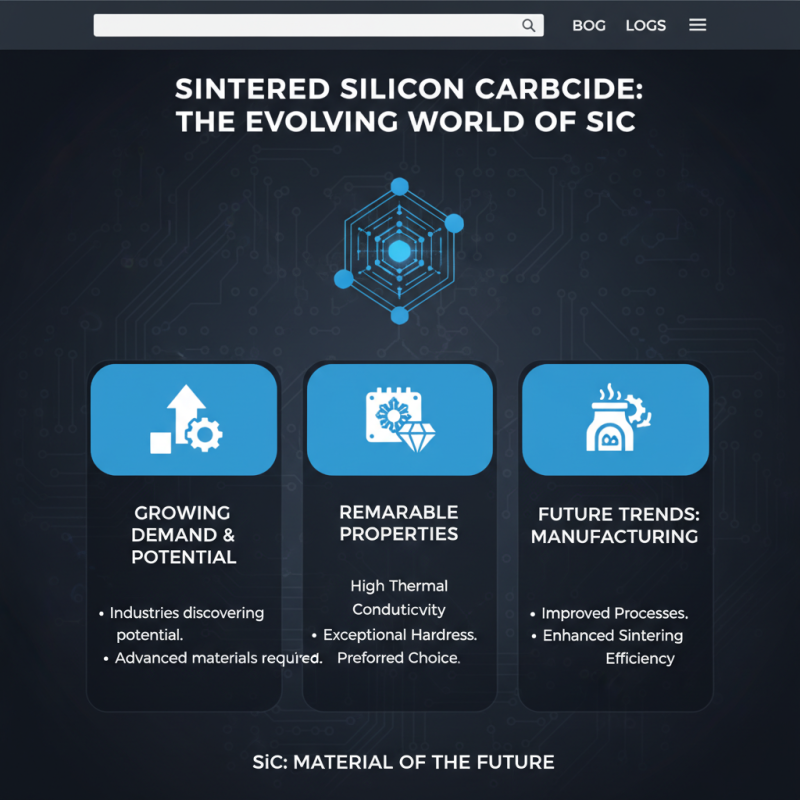
The world of sintered silicon carbide (SiC) is evolving rapidly. Numerous industries are discovering its potential. The demand for advanced materials is growing. Sintered SiC stands out due to its remarkable properties. High thermal conductivity and exceptional hardness make it a preferred choice. Future trends will likely focus on improving its manufacturing processes. Techniques that enhance the efficiency of sintering will emerge.
Innovations in this field may also involve new applications. For example, advancements in automotive and aerospace industries could prove transformative. Lightweight yet durable materials can lead to safer, more efficient vehicles. However, challenges remain. Manufacturing costs can be high, limiting broader adoption. Researchers are constantly seeking to lower these costs. Each discovery brings a mix of optimism and uncertainty.
The environmental impact of production processes is another concern. Sustainable methods must be explored. Innovative techniques could address these issues. Engaging with this technology means embracing both its potential and its challenges. The road ahead is filled with possibilities, but reflection on its implications is essential.