Top Silicon Carbide Rod Applications and Benefits in Modern Industry?
In today's advanced industrial landscape, the significance of the Silicon Carbide Rod cannot be overstated. Renowned expert Dr. Emily Chen, a leader in materials science, emphasizes, "Silicon Carbide Rods are revolutionizing high-temperature applications." These components are essential in various sectors, including aerospace, automotive, and electronics.
The unique properties of Silicon Carbide Rods, such as their thermal resistance and electrical conductivity, make them versatile. Industries use them for high-performance motors and as heating elements. However, the transition to this material isn't without challenges. Many companies still struggle with integration.
Looking at the future, companies must evaluate the benefits against the complexities. Silicon Carbide Rod technology offers immense potential, yet its adoption demands careful consideration. The right approach could significantly enhance operational efficiency and product performance. Ultimately, the journey of adopting Silicon Carbide Rods will require both innovation and reflection.

Top Applications of Silicon Carbide Rods in Power Electronics
Silicon carbide (SiC) rods play a crucial role in the realm of power electronics. Their unique properties contribute to increased efficiency and thermal management in various applications. The global SiC market is projected to reach $2.9 billion by 2025, according to industry reports. This surge is driven by the demand for energy-efficient systems.
One significant application of SiC rods is in electric vehicles (EVs). These rods help enhance the performance of power inverters, which convert DC from batteries to AC for electric motors. Research shows that SiC devices can improve power density by 50% compared to traditional silicon counterparts. This boosts the overall efficiency of EV systems, resulting in longer driving ranges and reduced energy consumption.
Moreover, SiC rods are essential in renewable energy systems. They are widely used in solar inverters and wind turbine converters. Their ability to operate at high temperatures allows for better performance in challenging environments. However, the high cost of SiC materials can be a barrier for some manufacturers. Continued advancements in production processes are necessary to address this issue, making SiC technologies more accessible.
Benefits of Silicon Carbide Rods in High-Temperature Environments
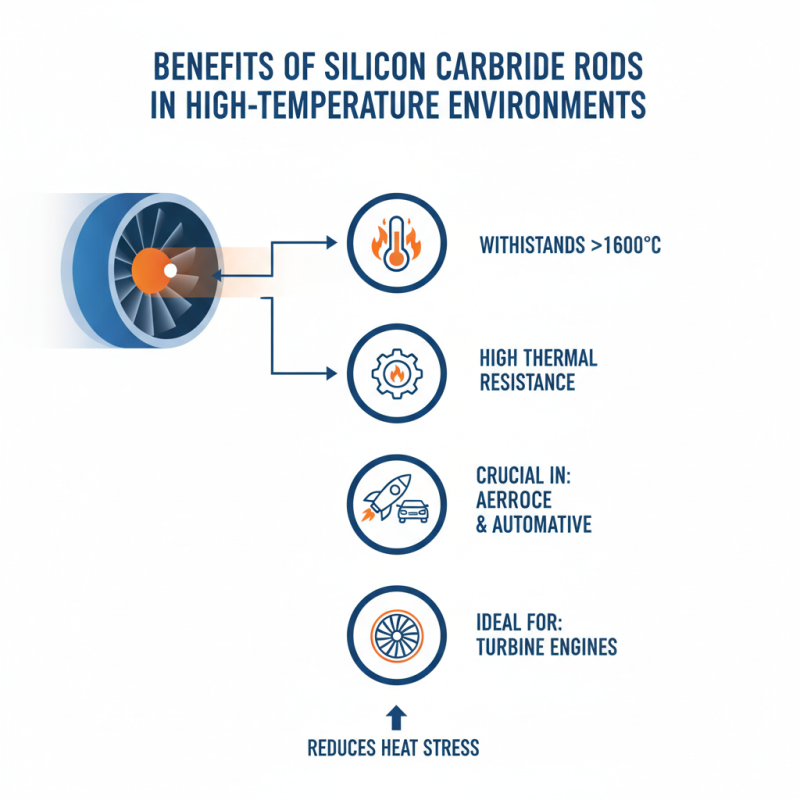
Silicon carbide (SiC) rods are gaining attention in industries that operate under high-temperature conditions. These rods can withstand temperatures reaching over 1600°C. This high thermal resistance is crucial in sectors like aerospace and automotive. For example, they can be effectively used in turbine engines, where heat stress is significant.
The benefits of SiC rods extend beyond mere heat tolerance. They show excellent chemical stability, reducing degradation in harsh environments. According to a recent industry report, over 70% of SiC applications demonstrate longevity in services exceeding 10,000 hours. Reliability is critical in modern manufacturing processes. Yet, issues like brittleness can arise, leading to potential failures. Users should conduct thorough assessments to ensure suitability.
Moreover, SiC rods contribute to energy efficiency. In high-temperature applications, they reduce heat loss, resulting in lower operational costs. A study indicated that adopting SiC rods can enhance performance by as much as 30% in some setups. However, the initial investment can be a barrier. Many companies hesitate to make the switch, fearing high upfront costs. It’s essential to weigh these factors carefully. Prospective users should assess both long-term savings and short-term investments before deciding.
Silicon Carbide Rods in Semiconductor Manufacturing and Their Impact
Silicon carbide (SiC) rods play a crucial role in semiconductor manufacturing. These rods are known for their high thermal conductivity and ability to withstand extreme temperatures. Reports indicate that the market for SiC technology is projected to grow significantly, with an estimated CAGR of 20% from 2021 to 2026. This growth is driven by the increasing demand for efficient power devices.
In semiconductor production, SiC rods are used to create devices that improve energy efficiency. They can operate at higher voltages and temperatures than traditional silicon materials. This leads to smaller systems and reduced energy costs. However, the initial setup for SiC processing can be complex. Manufacturers need to ensure their equipment is compatible with SiC materials.
**Tips:** When considering SiC rods, assess your production capabilities. Not all systems adapt easily to new materials. Training staff on the nuances of SiC processing can mitigate errors. Moreover, continuous evaluation of SiC technology's performance is essential; not all applications benefit equally. Having a flexible approach leads to better long-term results.
Top Silicon Carbide Rod Applications and Benefits in Modern Industry
| Application |
Benefits |
Key Features |
| Power Electronics |
High efficiency and reduced thermal losses |
Wide bandgap, high thermal conductivity |
| RF & Microwave Applications |
Improved performance in high-frequency operations |
High breakdown voltages, low noise |
| LED Technology |
Enhanced light output and durability |
Excellent electrical properties, thermal stability |
| Automotive Applications |
Increased efficiency in electric vehicles |
High temperature resistance, lightweight |
| Aerospace Industry |
Reliability in extreme conditions |
Corrosion resistance, lightweight |
Comparison of Silicon Carbide Rods with Traditional Materials in Industry
Silicon carbide rods stand out when compared to traditional materials like metal or ceramic. They offer superior thermal conductivity and can endure higher temperatures. These properties make them ideal for harsh industrial environments. Metal rods can warp under extreme heat. Ceramics may crack easily. Silicon carbide simply performs better.
Tips: When choosing materials, always consider the operating conditions. Make sure they match your application needs. Silicon carbide rods can be more expensive initially, but their longevity can justify the cost.
Moreover, the weight of silicon carbide rods is another advantage. They are lighter than many metals. This can reduce the energy needed for transportation and installation. However, the manufacturing process can be complex. It requires special handling and testing. This might limit accessibility for some industries.
Tips: Assess your production capabilities before transitioning. A detailed analysis helps ensure you are ready for the change. While silicon carbide rods have many benefits, understanding the transition is crucial.
Top Silicon Carbide Rod Applications and Benefits in Modern Industry
This bar chart illustrates the performance benefits of silicon carbide rods in various industry applications, including high-temperature environments and electrical components. The ratings are based on a scale of 1 to 10, highlighting the distinctive advantages of silicon carbide compared to traditional materials.
Future Trends and Innovations in Silicon Carbide Rod Technology
Silicon carbide (SiC) rods are gaining momentum in various industries. Their exceptional thermal conductivity and high-temperature stability make them ideal for demanding applications. According to a recent market analysis, the global silicon carbide market is projected to reach $6.03 billion by 2025. This rapid growth is driven by a surge in demand for energy-efficient electronics.
Future trends suggest an increasing focus on enhancing the purity and performance of SiC materials. Innovations in manufacturing techniques are aimed at reducing defects. For example, recent advancements in sintering technology have shown a 20% improvement in material strength. Additionally, the integration of SiC rods in electric vehicles is expected to enhance energy efficiency, with potential reductions in energy loss by up to 30%.
However, challenges remain. The high cost of raw materials and complex manufacturing processes hinder widespread adoption. Emerging research is exploring novel composites that could lower costs while maintaining performance. As industries seek greener solutions, the development of biodegradable SiC composites could be a game changer. The direction of SiC technology reveals both promise and the need for ongoing refinement.