How to Source Sic Semiconductor for Global Procurement Needs?
In the rapidly evolving landscape of semiconductor technology, sourcing Sic semiconductor materials has become essential for global procurement. The demand for Sic semiconductors is projected to grow at a compound annual growth rate (CAGR) of over 25% between 2020 and 2026, according to a recent report by MarketsandMarkets. This growth is driven by the increased need for energy-efficient devices in various industries, including automotive and renewable energy.
Sic semiconductor technology provides superior performance compared to traditional silicon-based solutions. With higher voltage ratings, greater thermal conductivity, and faster switching speeds, they serve as a crucial component in power electronics. The International Energy Agency estimates that a shift to Sic-based solutions could reduce energy consumption in power modules by 50%. However, sourcing these components is not without challenges. Issues like supply chain disruptions and supplier quality require careful attention.
Companies must prioritize partnerships with reliable suppliers that demonstrate expertise in Sic semiconductor production. Engaging in robust supply chain strategies is vital to mitigate risks. Maintaining quality while addressing growing market demands will need innovative approaches. Thus, the focus shifts to finding balanced solutions that accommodate both performance and sustainability.

Understanding the Importance of Sic Semiconductors in Global Markets
Sic semiconductors play a crucial role in global markets today. Their efficiency and thermal performance make them ideal for various applications, from electric vehicles to renewable energy systems. As industries move towards greener technologies, the demand for Sic semiconductors continues to rise. This trend emphasizes the importance of sourcing high-quality materials to meet procurement needs.
When sourcing Sic semiconductors, consider the supplier's reputation and experience in the industry. Work with companies that have a proven track record in reliability. You may face challenges, such as limited supply chains or fluctuating prices. These factors require flexibility and strategic planning.
Tips: Always evaluate multiple suppliers before making a decision. This ensures competitive pricing and quality assurance. Developing strong relationships with niche suppliers can also yield better access to materials. Keep abreast of market trends to anticipate shifts in pricing or availability. Such vigilance can mitigate risks associated with procurement.
How to Source Sic Semiconductor for Global Procurement Needs? - Understanding the Importance of Sic Semiconductors in Global Markets
| Region |
Market Size (USD Billion) |
Growth Rate (%) |
Key Applications |
| North America |
3.5 |
15 |
Power Electronics, Automotive |
| Europe |
4.2 |
12 |
Renewable Energy, Industrial |
| Asia Pacific |
5.8 |
20 |
Consumer Electronics, Telecommunications |
| Latin America |
1.2 |
10 |
Automotive, Lighting |
| Middle East & Africa |
0.8 |
8 |
Energy, Telecommunications |
Identifying Key Suppliers and Manufacturers of Sic Semiconductors
In the growing market for Sic semiconductors, identifying key suppliers plays a crucial role in global procurement. According to a recent analysis by IC Insights, the market for Sic semiconductors is projected to reach $3.9 billion by 2026, reflecting an annual growth rate of over 20%. This rapid expansion underscores the importance of sourcing from reliable manufacturers.
When sourcing Sic semiconductors, key manufacturers often focus on technology and production capabilities. It is essential to assess supplier credentials. Look for those who provide comprehensive documentation and comply with international standards. Reports show that companies prioritizing quality assurance outperform their peers significantly.
Tips: Engage in regular communication with suppliers. Ask about their production capacity and lead times. Consider performing site visits to evaluate their manufacturing processes. Gathering firsthand information can highlight areas that require reflection and improvement. Also, diversify your supplier base to mitigate risks and ensure competitive pricing.
Evaluating Quality and Performance Standards for Sic Semiconductor Sourcing
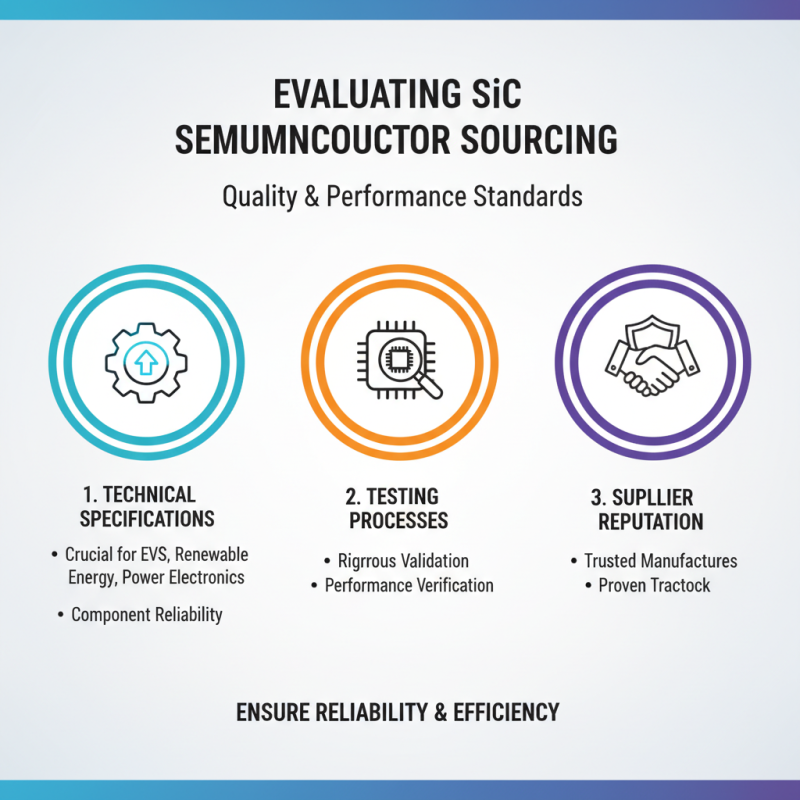
Sourcing SiC semiconductors requires careful evaluation of quality and performance standards. These components are crucial for applications in electric vehicles, renewable energy, and power electronics. To ensure reliability, focus on technical specifications, testing processes, and supplier reputations.
Quality assessment begins with material and design verification. Look for certifications that indicate adherence to industry standards. Supplier audits can also reveal the manufacturing consistency. Not all suppliers maintain the same level of transparency. Engage with them directly to understand their processes better.
**Tip:** Ask for sample products before making larger orders. This can help gauge performance firsthand.
Performance metrics should include thermal conductivity, voltage handling, and switching frequency. Compare specifications across various suppliers to identify the best fit for your needs. A supplier's history with high-performance applications is another indicator of trustworthiness.
**Tip:** Consider using independent testing labs for critical applications. This provides unbiased data and validates supplier claims.
Navigating Logistics and Supply Chain Challenges in Semiconductor Procurement
Navigating logistics and supply chain challenges in semiconductor procurement requires strategic planning. With global demand surging, firms must enhance their supply chain visibility. For effective sourcing, consider diversifying suppliers to mitigate risks. Relying on a single vendor can lead to vulnerabilities, especially during disruptions.
It’s crucial to maintain open communication channels with logistics partners. Collaborating closely can improve lead times and reduce unexpected delays. Look into local suppliers where possible; this can cut transportation costs and expedite deliveries. Leverage technology to track shipments and monitor inventory levels.
Tips: Always assess the reliability of your suppliers. A thorough vetting process can prevent future issues. Stay informed about geopolitical changes that may impact sourcing. Building strong relationships with logistics providers is essential; this allows for more flexible responses to changing conditions. Keep re-evaluating your strategies for continual improvement. The semiconductor market is volatile; adaptability is crucial.
Establishing Long-term Relationships with Sic Semiconductor Providers
Establishing long-term relationships with SiC semiconductor providers is crucial for an effective global procurement strategy. Building trust takes time, but it pays off. Regular communication helps address expectations and fosters collaboration. It's important to understand their production capabilities. Some may struggle with scaling up.
Engaging in joint development projects can enhance these relationships. This approach allows for shared risks and benefits. Additionally, providing feedback helps suppliers improve their offerings. However, be mindful of potential communication barriers. Cultural differences can lead to misunderstandings.
Flexibility is key when navigating these partnerships. Be prepared for delays or shifts in supply chain dynamics. Reflecting on challenges is essential. If a supplier lacks transparency, consider alternative options. Long-term partnerships should always enhance your procurement efficiency and reliability.
Global Procurement of SiC Semiconductors - Annual Demand and Supply Analysis
This chart illustrates the projected annual demand and supply of SiC semiconductors over the next five years. The increasing gap between demand and supply underscores the necessity for establishing long-term relationships with reliable SiC semiconductor providers to meet the global procurement needs.