Leave Your Message

China Top Silicon Carbide Heating Element Supplier?

Choosing a China top Silicon Carbide Heating Element supplier requires more than comparing catalog prices. Practical performance depends on furnace design, operating temperature, atmosphere, electrical loading, and replacement access. A reliable supplier should explain these variables clearly. It should also provide material data, resistance tolerances, temperature ratings, and dimensional drawings before production begins.

Look closely at manufacturing evidence. Ask how the elements are formed, processed, inspected, and packed. Request test records for resistance, density, appearance, and oxidation protection. Clear traceability matters. Batch numbers, inspection reports, and consistent labeling can prevent costly installation mistakes. A supplier with export experience should understand packaging risks, moisture exposure, and damage during long-distance transport.

Small details matter.

For example, a supplier may recommend a 1450°C-rated element for a furnace operating near that limit. That choice may appear efficient, yet it leaves little safety margin. Experienced engineers should review the thermal profile and duty cycle first. They should also consider whether the element is horizontal, vertical, U-shaped, or custom-made.

Not every highly ranked supplier fits every application. Some offer strong customization but limited technical support. Others provide attractive pricing but incomplete documentation. This is where careful comparison becomes important. Buyers should evaluate communication, production capacity, quality controls, after-sales response, and replacement availability together.

A trustworthy China supplier does not promise impossible service life. It explains expected limits and maintenance requirements. It admits uncertainty when operating conditions are unclear. That honesty may be more valuable than a perfect sales presentation. The best choice is usually the supplier that combines verified manufacturing capability, responsive engineering support, and dependable product consistency.
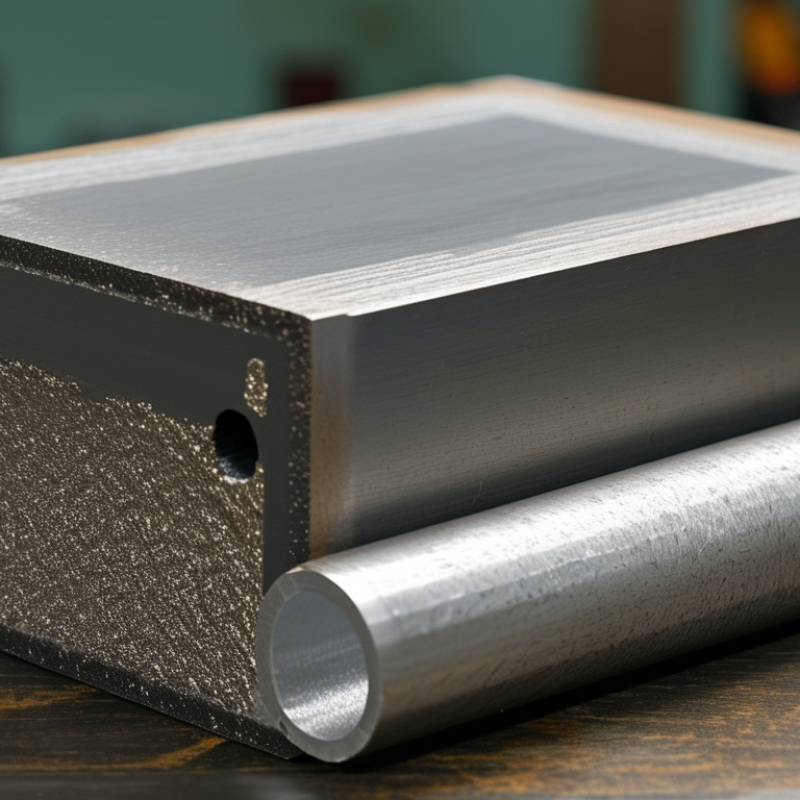
China Top Silicon Carbide Heating Element Supplier?

What Are Silicon Carbide Heating Elements?

Silicon carbide heating elements are electric resistors made from recrystallized silicon carbide. When current passes through them, electrical resistance produces intense heat. They commonly serve laboratory, ceramic, glass, metal, and heat-treatment furnaces. Many designs operate between 1,000°C and 1,600°C, while specialized elements can reach higher temperatures. They are not ordinary heating wires.

Their value becomes clearer inside a working furnace. The element glows orange, transfers heat without direct flame, and supports relatively clean temperature control. The U.S. Department of Energy reports that process heating consumes about 60% of industrial energy use, so element efficiency and service life deserve serious attention. In practice, furnace atmosphere, loading cycles, voltage, and installation spacing strongly affect performance. A technically correct element can still fail early.

Silicon carbide gradually oxidizes during service. Its resistance usually increases, often requiring voltage compensation from the control system. This detail is easy to underestimate. Industry testing guidance, including data from ASTM high-temperature materials practices, emphasizes stable electrical measurement and controlled thermal conditions. A reliable supplier should provide resistance tolerance, operating-temperature limits, dimensions, connection guidance, and replacement records. The best choice is not always the element with the highest temperature rating. Sometimes, a lower-rated design offers better control and longer service life.

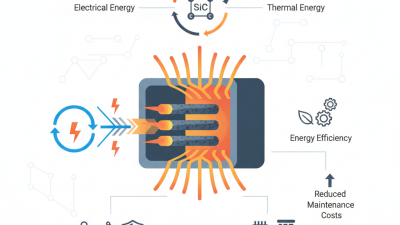
How Are Silicon Carbide Heating Elements Designed and Manufactured in China?

China Top Silicon Carbide Heating Element Supplier?

How Are Silicon Carbide Heating Elements Designed and Manufactured in China?

Design begins with the furnace, not a standard catalogue size. Engineers measure chamber width, operating temperature, atmosphere, and available voltage. These details determine the element’s length, diameter, hot zone, and cold ends. Rod, U-shaped, spiral, and multi-leg designs serve different heating layouts. Electrical resistance is calculated carefully. Small errors can cause uneven heating or early failure.

Manufacturing starts with high-purity silicon carbide powder and controlled forming. Extrusion or pressing creates the basic shape. The green element is then dried slowly to reduce cracking. High-temperature sintering develops its strength and conductivity. After that, workers machine terminals and inspect critical dimensions. Each batch should receive resistance, appearance, and load testing. Traceability matters when elements operate above 1,000°C.

Practical production is less perfect than a drawing suggests. Thin sections may chip during machining. Terminal connections may need adjustment after furnace installation. Oxidation, furnace cycling, and dust can also shorten service life. Experienced Chinese manufacturers usually review these failures instead of hiding them. They compare test data with field conditions and refine the design. A reliable supplier should explain material limits clearly, provide inspection records, and accept reasonable technical questions. The best design is not always the most powerful one. It is the one that matches the furnace accurately.

China Top Silicon Carbide Heating Element Supplier? How Are Silicon Carbide Heating Elements Designed and Manufactured in China?

Silicon carbide heating elements are designed by balancing element geometry, electrical resistance, furnace atmosphere, surface loading, and operating temperature. The chart shows representative maximum working-temperature ranges for common SiC element material categories used in industrial furnace applications.

Representative industry ranges: actual performance depends on element diameter, hot-zone length, surface loading, furnace atmosphere, voltage, installation spacing, and temperature-control accuracy. Manufacturing typically includes SiC powder preparation, forming, drying, high-temperature firing, machining, terminal fitting, and electrical testing.

What Industries Use Silicon Carbide Heating Elements?

China Top Silicon Carbide Heating Element Supplier?

What Industries Use Silicon Carbide Heating Elements?

Silicon carbide heating elements serve industries needing stable, high-temperature heat. Ceramic manufacturers use them for sintering, glazing, and kiln firing. Many furnaces operate above 1,000°C, where metallic heaters may soften or oxidize faster. The International Energy Agency reports that industry consumed about 37% of global final energy in 2022. Better furnace control can reduce wasted heat, although results depend on insulation, loading, and maintenance.

Glass producers use silicon carbide elements for melting, tempering, and laboratory testing. Metallurgy facilities apply them in heat-treatment and non-ferrous processing furnaces. Semiconductor plants also use them in diffusion, annealing, and wafer-processing equipment. SEMI’s 2024 World Fab Forecast projected continued expansion in global semiconductor manufacturing capacity, increasing demand for reliable thermal systems. Small temperature errors matter. They can damage an entire batch.

Research laboratories and technical colleges use these elements in compact box and tube furnaces. Their advantages include high operating temperatures, relatively fast heating, and controllable electrical resistance. However, performance is not automatic. Element aging, furnace atmosphere, voltage changes, and uneven loading can shorten service life. The U.S. Department of Energy identifies industrial process heating as a major energy-use area, yet many facilities still judge heaters by purchase price alone. That approach needs reconsideration. Proper sizing and regular resistance checks often matter more than a lower initial quote.

China Top Silicon Carbide Heating Element Supplier? - What Industries Use Silicon Carbide Heating Elements?

Industry Typical Applications Typical Operating Temperature Why Silicon Carbide Elements Are Used Common Furnace or Equipment Type
Ceramics and Refractories Firing tiles, sanitaryware, technical ceramics, kiln furniture, and refractory products Approximately 1,000–1,600°C High-temperature capability, good thermal stability, and resistance to oxidation in air Tunnel kilns, shuttle kilns, and laboratory kilns
Glass Manufacturing Glass melting, annealing, bending, tempering, and laboratory glass processing Approximately 800–1,500°C Stable heat output and suitability for prolonged high-temperature operation Glass furnaces, annealing ovens, and electric melting systems
Metallurgy and Heat Treatment Annealing, sintering, hardening, tempering, and non-ferrous metal processing Approximately 600–1,400°C Fast heating, high radiant efficiency, and compatibility with controlled furnace atmospheres Box furnaces, pit furnaces, and batch heat-treatment furnaces
Powder Metallurgy Metal powder sintering, carbide processing, and advanced material densification Approximately 1,000–1,500°C Suitable for high-temperature cycles and precise thermal profiling Sintering furnaces, pusher furnaces, and vacuum-compatible systems
Electronics and Semiconductor Materials Ceramic substrates, electronic materials, crystal growth support, and specialty coatings Approximately 800–1,600°C Low contamination potential, controllable power density, and reliable temperature uniformity Clean-process furnaces, tube furnaces, and laboratory production systems
Chemical and Materials Research Calcination, thermal decomposition, catalyst testing, and materials synthesis Approximately 500–1,500°C Broad temperature range, responsive control, and compatibility with laboratory-scale equipment Muffle furnaces, tube furnaces, and high-temperature testing chambers
Battery and Energy Materials Cathode and anode material treatment, ceramic electrolyte processing, and precursor calcination Approximately 500–1,200°C Accurate thermal control and suitability for repeated controlled-atmosphere cycles Rotary kilns, box furnaces, and atmosphere-controlled furnaces
Aerospace and Advanced Composites Ceramic matrix composites, thermal protection materials, and high-performance coatings Approximately 1,000–1,600°C High heat resistance and dependable performance during extended thermal cycles High-temperature furnaces, vacuum furnaces, and controlled-atmosphere systems
Laboratories and Universities Research, sample preparation, thermal testing, and small-batch material development Approximately 300–1,600°C Compact designs, controllable heating, and availability in various shapes and power ratings Muffle furnaces, tube furnaces, and split furnaces

Note: Actual operating temperature depends on element geometry, furnace design, atmosphere, electrical loading, and installation conditions. Silicon carbide heating elements are commonly selected for high-temperature electric furnaces because they offer high radiant efficiency, mechanical rigidity, and good resistance to oxidation.

How to Evaluate a Top Chinese Silicon Carbide Heating Element Supplier?

How to Evaluate a Top Chinese Silicon Carbide Heating Element Supplier?

A reliable supplier should understand your furnace, not only sell a standard element. Ask for the furnace temperature, atmosphere, voltage, resistance, hot-zone length, and cold-end dimensions. These details affect service life. Silicon carbide elements often operate near 1,600°C in air, but actual performance depends on loading, airflow, and furnace design.

Demand traceable inspection records for each production batch. Check resistance tolerance, dimensional accuracy, hot-zone density, and terminal quality. A supplier should explain resistance aging and provide a practical compensation method.

The U.S. Department of Energy’s 2022 Industrial Decarbonization Roadmap reports that process heating represents about 51% of U.S. manufacturing energy use. Small efficiency losses can become costly across continuous production. The IEA’s Energy Technology Perspectives 2024 also identifies high-temperature industrial heat as a difficult area to decarbonize.

Factory evidence matters more than polished certificates. Request sample test reports, raw-material controls, export packaging photos, and failure-analysis records. Ask whether engineers can review temperature maps and replacement intervals.

I would also test a small batch before placing a large order. My own checklist has one weakness: laboratory data cannot fully predict dust, vibration, or uneven furnace loading.

A serious supplier should admit that limitation and adjust the design after field feedback. Fast replies are useful. Clear technical answers matter more.

What Quality, Service, and Compliance Standards Should Buyers Check?

China Top Silicon Carbide Heating Element Supplier?

A reliable supplier should provide more than a low quotation. Ask for material composition records, resistance tolerance data, and dimensional inspection reports. Each heating element should have a traceable batch number. Check whether the supplier controls density, surface finish, and terminal quality during production. Small cracks near terminals can cause early failure under repeated thermal cycling.

Quality evidence should include resistance testing at a defined temperature, load testing, and thermal shock evaluation. Request sample data, not only a general certificate. An ISO 9001 system can show process discipline, but it does not guarantee every product. Review calibration records for testing equipment. Also compare the supplier’s stated lifespan with your furnace temperature, atmosphere, voltage, and operating cycle. Claims often look too clean.

Service quality becomes visible after the purchase. Confirm engineering support, replacement recommendations, packaging methods, and response times for technical questions. The supplier should explain installation limits clearly. Ask for drawings and operating instructions before placing a large order. Compliance also requires attention. Check applicable electrical, environmental, and import requirements for your destination market. Request current declarations and test reports, such as material compliance documents where relevant. Do not accept copied files without verification. I would also inspect a small trial order before approving mass production. It may delay the project, but it can reveal uneven dimensions or unstable resistance. Controls can still fail, and buyers should plan for that possibility.