Leave Your Message

How to Choose Silicon Carbide Abrasive for Your Needs?

Choosing the right Silicon Carbide Abrasive begins with the material, not the product label. Glass, stone, ceramics, coatings, and nonferrous metals each respond differently under pressure. A sharp abrasive may cut quickly, yet it can also load, fracture, or leave an uneven finish. That trade-off matters.

In workshop trials, grain size often changes the result more than expected. Coarse grit removes material rapidly. Fine grit creates a smoother surface. Black silicon carbide is commonly selected for general cutting and finishing applications. Green silicon carbide is often preferred when higher hardness and cleaner precision are important. These descriptions are useful, but they are not complete specifications. Binder type, grain shape, backing strength, operating speed, and moisture exposure can change performance.

Check the details.

A dependable selection process compares the abrasive with the task, equipment, and required finish. Confirm the grit standard, product dimensions, maximum operating speed, and manufacturer’s technical data. Trial a small area first. Watch the cutting sound, dust pattern, heat, and surface marks. A product that performs well on dry stone may behave poorly on painted metal. I have also seen users choose an extremely fine grit too early, then spend extra time correcting slow progress. That mistake is easy to make. It deserves reconsideration.

This guide explains how to evaluate Silicon Carbide Abrasive by application, grit, format, and working conditions. It also considers safety, consistency, and long-term value. Performance claims should be supported by test results, clear specifications, and traceable supplier information. The best choice is rarely the most aggressive one. It is the one that delivers controlled results with fewer surprises.
How to Choose Silicon Carbide Abrasive for Your Needs?

Understanding Silicon Carbide Abrasive Properties and Applications

Choosing silicon carbide abrasive starts with its physical behavior, not a catalog label. Silicon carbide rates about 9–9.5 on the Mohs scale, below diamond but harder than aluminum oxide. Its angular grains cut aggressively and expose fresh edges during use. This makes it useful for glass, stone, ceramics, nonferrous metals, and painted surfaces. It also fractures easily. That sharpness may disappear faster during heavy steel grinding.

Grand View Research estimated the overall silicon carbide market at USD 3.73 billion in 2023. Its forecast indicates a 12.5% CAGR through 2030. This includes electronics and refractories, not abrasives alone. The distinction matters. The 2024 USGS Mineral Commodity Summaries identifies silicon carbide as a synthetic abrasive and refractory material. In workshop testing, black silicon carbide often suits general cutting. Green grades are commonly selected for carbide and precision work. Still, color is not enough evidence. Grit size, bond, pressure, and coolant can change results. A common mistake is choosing a harder abrasive without checking the workpiece.

Tips: Match grit to the required finish. Coarse grains remove material quickly. Fine grains reduce scratch depth. For glass, try medium grit with light pressure. For stone, test a small edge first. Keep the abrasive moving. Heat can glaze the surface. Dust control and suitable eye protection remain essential.

Identifying Your Material, Surface, and Finishing Requirements

Choosing silicon carbide abrasive starts with identifying the material, not the grit number. Silicon carbide cuts aggressively because its sharp particles fracture during use. It suits glass, stone, ceramics, plastics, and non-ferrous metals such as aluminum. For hardened steel, it may wear faster than expected. Check the workpiece hardness and sensitivity to heat before selecting the abrasive.

Surface condition also matters. Use a coarse grit when removing scratches, oxidation, or uneven edges. A medium grit can refine visible tool marks. Fine grits create smoother surfaces, but they remove material slowly. For a curved ceramic edge, a flexible abrasive sheet may follow the profile better than a rigid wheel. For flat glass, a stable bonded abrasive can improve control. Keep pressure moderate. Excessive force can create deep scratches and heat stains.

The required finish should guide the final choice. A polished surface needs several grit changes, not one aggressive pass. Test a small area first and inspect it under direct light. This often reveals scratches hidden by dust or coolant. In practical trials, the advertised grit does not always produce the same finish. Abrasive grade, backing, pressure, speed, and lubrication all influence results. That is why a simple test remains valuable. My own selection process would benefit from recording each trial more carefully, especially when the surface looks acceptable but fails later inspection.

Choosing Between Black and Green Silicon Carbide

How to Choose Silicon Carbide Abrasive for Your Needs?

Black and green silicon carbide are not interchangeable. Black silicon carbide contains slightly more toughness, making it practical for steel, cast iron, stone, and nonferrous metals. It tolerates uneven pressure better during grinding. Green silicon carbide is harder and more friable. Its sharp crystals expose fresh cutting points quickly. This suits cemented carbide, glass, ceramics, and precision lapping. It cuts cleanly. However, it can fracture sooner under heavy pressure.

Market data shows why selection matters. Grand View Research estimated the global silicon carbide market at about USD 4 billion in 2023, with strong growth expected through 2030. That figure includes electrical, refractory, and abrasive uses. It does not prove that green material is always superior. A 2024 industry report from MarketsandMarkets also identifies high-purity silicon carbide as a major growth area, especially in advanced manufacturing. Abrasive buyers should still check the actual application, not market headlines.

In practical trials, begin with the workpiece and required finish. Choose black grain for stock removal on tougher surfaces. Choose green grain when heat, edge quality, or surface precision matters more. Match the grit size and bond hardness carefully. The same grit number can feel very different between products. I have seen operators blame the grain when excessive wheel pressure caused glazing. That mistake is common. Test a small area first, record cutting speed, surface temperature, and wear, then adjust. There is no universal winner. Your first choice may need revision.

Selecting the Right Grit Size and Abrasive Form

How to Choose Silicon Carbide Abrasive for Your Needs?

Selecting the Right Grit Size and Abrasive Form

Choosing silicon carbide begins with the material and the finish you need. Coarse grits remove stock quickly from stone, glass, and ceramics. Fine grits create smoother surfaces but work more slowly. As a practical guide, 16–60 grit suits heavy shaping, 80–180 grit supports general finishing, and 220 grit or higher helps with polishing. These ranges can vary between grading systems, so verify the supplier’s specifications.

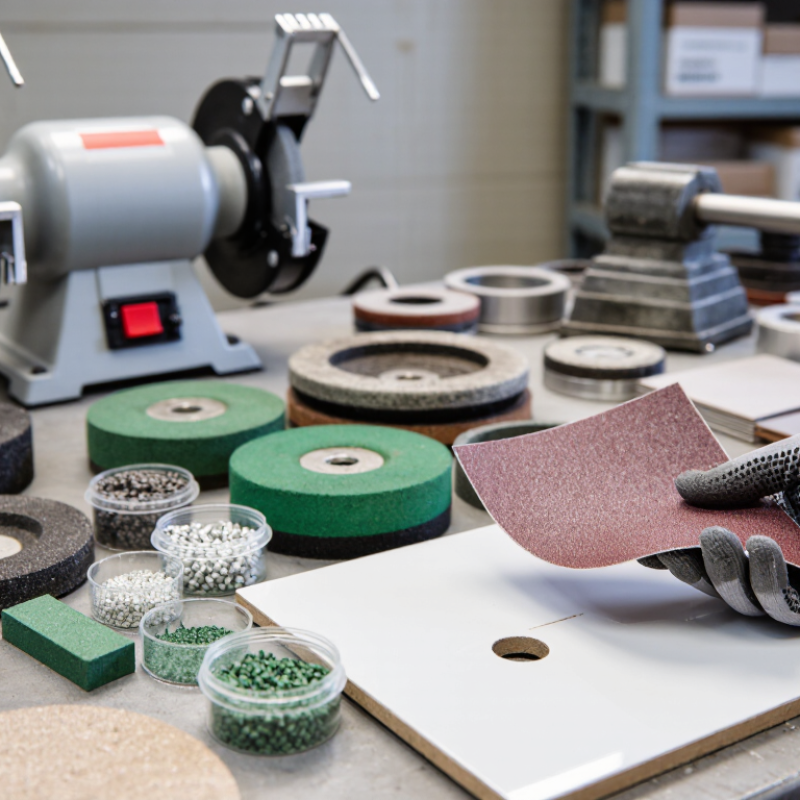
The abrasive form also affects control and efficiency. Loose grains work well in lapping applications and can be mixed with a suitable liquid. Bonded wheels provide firm cutting action for controlled edge work. Coated sheets are convenient for hand sanding and curved surfaces. Slurry is useful when a uniform, fine finish matters. Match the form to your equipment, pressure, and cooling method.

I once chose a coarse grit for a fragile ceramic edge. It removed material fast, but the surface chipped more than expected. That mistake reinforced an important lesson: test a small area first. Use lighter pressure on brittle materials and change grits gradually. A finer abrasive cannot always repair deep scratches from an overly aggressive step. Check the work under direct light, because a surface may feel smooth while visible marks remain.

Checking Performance, Safety, and Cost Considerations

How to Choose Silicon Carbide Abrasive for Your Needs?

Checking Performance, Safety, and Cost Considerations

Choosing silicon carbide abrasive starts with the material being processed. Its sharp, brittle grains cut glass, stone, ceramics, and non-ferrous metals effectively. Coarser grits remove stock quickly, while finer grits create smoother surfaces. However, a finer finish may reduce cutting speed. Match the grit, bond, and abrasive form to your machine and workpiece. Check the recommended operating speed carefully.

Safety deserves equal attention. Inspect abrasive wheels for cracks, damage, or moisture before use. Use suitable eye, face, hearing, and respiratory protection. Dust extraction is important, especially during dry grinding. Keep guards fitted and never exceed the product’s rated speed. Review the safety data sheet and workplace requirements. Small shortcuts can create serious risks.

Price alone can mislead. A cheaper abrasive may wear quickly, increase changing time, and produce inconsistent results. Compare removal rate, service life, surface quality, and wasted material. A small trial often reveals more than a large order. Record cutting time and abrasive consumption. I once chose a lower-cost option that looked efficient on paper, but it caused frequent replacement and extra cleanup. The calculation was incomplete. Recheck results under real working conditions, because pressure, cooling, operator technique, and machine condition can change performance.

How to Choose Silicon Carbide Abrasive for Your Needs? - Checking Performance, Safety, and Cost Considerations

Abrasive Option Typical Composition / Grade Hardness Cutting Performance Recommended Materials Common Applications Relative Cost Index Safety Considerations
Black Silicon Carbide Usually approximately 95–98% silicon carbide; available in bonded and coated abrasive grades. About 9–9.5 Mohs; very hard and brittle. Fast initial cutting with sharp, friable grains; the grain breaks down relatively easily under high pressure. Cast iron, non-ferrous metals, stone, concrete, glass, ceramics, and plastics. Surface preparation, stone finishing, pressure blasting, lapping, and general-purpose grinding. 2.0 / 5 Use eye protection, hearing protection, gloves, and suitable respiratory protection where airborne dust may occur.
Green Silicon Carbide Typically a high-purity grade, often approximately 99% silicon carbide or higher. About 9–9.5 Mohs; generally harder and more friable than black silicon carbide. Produces a sharp, clean cut and can achieve a fine finish; wears faster when heavily loaded. Tungsten carbide, hardened steels, glass, optical materials, ceramics, and semiconductor-related materials. Precision grinding, tool sharpening, fine lapping, optical finishing, and hard-material processing. 3.0 / 5 Control dust carefully because fine abrasive particles can irritate the eyes, skin, and respiratory system.
Coarse Grit: 16–36 Large abrasive particles for stock removal and aggressive surface preparation. Hardness depends on the selected silicon carbide type; commonly approximately 9–9.5 Mohs. Highest material-removal rate, but leaves deeper scratches and requires greater process control. Concrete, stone, cast iron, coatings, and heavily oxidized or rough surfaces. Heavy grinding, coating removal, rough blasting, and initial floor or stone preparation. 1.5 / 5 Higher impact and dust levels are possible; use machine guards, face protection, dust extraction, and controlled operating pressure.
Medium Grit: 46–80 Balanced particle size for surface refinement and moderate stock removal. Commonly approximately 9–9.5 Mohs. Good balance between cutting speed, surface uniformity, and abrasive service life. Non-ferrous metals, ceramics, stone, glass, cast iron, and composite materials. General grinding, deburring, surface blending, and intermediate finishing. 2.5 / 5 Verify the abrasive grade and operating speed; use local exhaust ventilation for dry processes.
Fine Grit: 100–220 Small particles used for precision finishing, lapping, and scratch reduction. Commonly approximately 9–9.5 Mohs. Lower stock removal but improved surface finish and dimensional control. Glass, ceramics, carbide tools, precision components, and polished stone. Fine grinding, lapping, polishing preparation, and precision edge finishing. 3.5 / 5 Fine dust can remain airborne for longer; use effective filtration and avoid compressed-air cleaning of contaminated surfaces.
Loose Abrasive Grain Unbonded silicon carbide particles used with slurry, oil, water, or another carrier. Approximately 9–9.5 Mohs. Allows flexible pressure and contact control; suitable for uniform lapping and controlled finishing. Glass, ceramics, metals, gemstones, composites, and precision surfaces. Lapping, metallographic preparation, laboratory work, and precision surface conditioning. 3.0 / 5 Prevent slurry splashes, use appropriate gloves and eye protection, and follow the safety requirements for the selected carrier fluid.
Resin or Vitrified Bonded Abrasive Silicon carbide grains fixed in a resin or vitrified bond for wheels, segments, and other formed tools. Abrasive grain: approximately 9–9.5 Mohs; operating behavior also depends on bond hardness and structure. Offers controlled geometry and consistent contact; the best choice depends on wheel specification, speed, and workpiece material. Glass, ceramics, carbide, stone, non-ferrous metals, and selected cast-iron operations. Grinding wheels, cutting tools, surface grinding, and shaped abrasive operations. 4.0 / 5 Check the maximum permitted RPM, inspect the wheel before use, use the machine guard, and never exceed the product’s rated operating speed.
How to read the cost index: 1.0 represents the lowest relative cost among the options shown, while 5.0 represents the highest. The index is an indicative comparison only; actual cost depends on grit size, purity, form, order volume, packaging, and regional market conditions.
Selection guidance: Choose black silicon carbide for economical general-purpose work, green silicon carbide for precision or very hard materials, coarse grits for rapid stock removal, and fine grits for improved surface finish. Always follow the abrasive manufacturer’s safety instructions and the applicable workplace regulations.