What Is Silicon Carbide and What Is It Used For?
Silicon Carbide is a hard, heat-resistant compound made from silicon and carbon. It occurs naturally in tiny amounts, but most commercial material is manufactured. Its crystal structure gives it high thermal conductivity, strong chemical stability, and excellent resistance to wear. These properties make it valuable in demanding industrial environments.
This article explains what Silicon Carbide is, how it is produced, and why its performance differs from ordinary ceramics. It also examines common forms, including abrasive grains, ceramic components, powders, and semiconductor wafers. Readers will see how it supports electric vehicle inverters, solar power systems, furnace linings, cutting tools, and protective armor. A practical example is its use in power electronics, where smaller, faster-switching devices can reduce energy losses and manage heat more effectively.
Its advantages are significant. They are not unlimited. Manufacturing can be costly, and brittle components may fail under sudden mechanical impact. Product quality also depends on purity, grain structure, coating, and processing methods. Technical claims should therefore be checked against supplier data, engineering standards, and independent testing. Some applications remain under development, especially where cost and large-scale production create barriers.
The discussion separates established uses from emerging possibilities. It considers performance, maintenance, energy efficiency, and material limitations. This balanced approach helps engineers, buyers, students, and curious readers understand where Silicon Carbide provides genuine value—and where another material may still be more practical.

What Is Silicon Carbide?
Silicon carbide is an inorganic compound made from silicon and carbon. Its chemical formula is SiC. It occurs naturally in extremely small amounts, but most usable material is manufactured. Industrial production usually combines silica-rich materials with carbon at very high temperatures. The result can be crushed into grains, shaped into ceramics, or grown into single-crystal wafers.
It is extremely hard. Silicon carbide also tolerates high heat, resists chemical corrosion, and conducts heat efficiently. These properties explain its wide use in abrasive papers, cutting tools, kiln furniture, and high-temperature furnace parts. Electrical engineers also use SiC in power devices because it can operate at higher temperatures and voltages than many conventional semiconductor materials. Electric vehicles, solar inverters, and industrial power systems may benefit from this performance.
Its hardness is practical, but it creates manufacturing challenges. Shaping and polishing SiC can require specialized equipment and careful quality control. The material is not flawless. Defects, surface damage, and uneven crystal growth can reduce performance, especially in electronic components. A useful description, therefore, must include both its strength and its limitations. Silicon carbide is not simply a “super material”; it is a carefully engineered ceramic whose value depends on purity, structure, and the application.
How Silicon Carbide Is Made
What Is Silicon Carbide and What Is It Used For?
Silicon carbide begins with silica, commonly found in quartz sand, and a carbon source such as petroleum coke. These materials enter an electric resistance furnace with graphite electrodes. Inside, temperatures can exceed 2,000°C. The mixture reacts slowly around a central graphite core. That heat is severe.
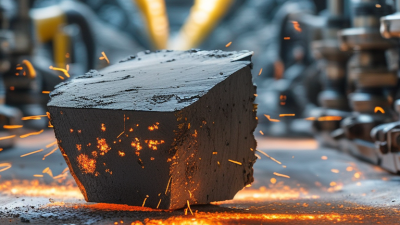
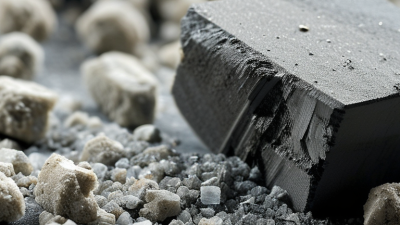
After cooling, the furnace produces a hard, dark crystalline mass. Workers break this mass into smaller pieces, then crush, screen, and classify the grains. Magnetic separation can remove metallic particles. Chemical cleaning reduces unwanted oxides and other impurities. Particle size matters greatly. Coarse grains suit cutting and grinding, while fine powders support ceramics and surface finishing.
Higher-purity silicon carbide requires more controlled processing. Manufacturers may convert purified material into vapor and grow large single-crystal boules. These boules are sliced into thin wafers and polished for electronic devices. The process demands careful temperature control. Small defects can affect performance. The method is powerful, but not perfectly neat.
Silicon carbide is used in abrasive wheels, kiln furniture, wear-resistant seals, and high-temperature furnace parts. Its hardness helps it cut difficult materials. Its thermal stability supports demanding industrial environments. In power electronics, its wide bandgap and high breakdown strength allow smaller, efficient components. Yet production remains energy-intensive, and crystal defects still require constant inspection.
Key Properties and Forms of Silicon Carbide
What Is Silicon Carbide and What Is It Used For?
Key Properties and Forms of Silicon Carbide
Silicon carbide is a synthetic ceramic made from silicon and carbon. Its crystal structure gives it unusual strength. It has a bandgap near 3.26 electron volts and a breakdown field roughly ten times higher than silicon. Thermal conductivity can reach 3 to 5 watts per centimeter-kelvin. This helps devices move heat away from crowded electrical systems. It is also extremely hard, ranking near 9 to 9.5 on the Mohs scale. Still, hardness does not mean toughness. Poorly designed parts can crack under sudden thermal or mechanical stress.
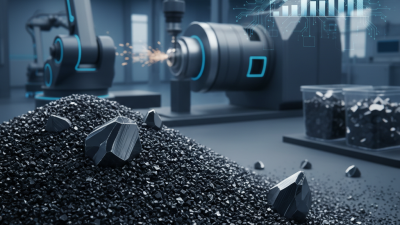
Manufacturers produce silicon carbide in several useful forms. Coarse grains become abrasive wheels, cutting tools, and wear-resistant linings. Fine powder supports polishing and ceramic processing. Dense sintered parts serve in furnace components, seals, and heat exchangers. Semiconductor production uses wafers and epitaxial layers, where controlled thickness and low defect density matter. These forms look similar in catalogs, but their performance differs sharply. Purity, polytype, porosity, and surface finish can change results.
Power electronics is driving significant interest. The International Energy Agency reported nearly 14 million electric car sales in 2023, representing about 18% of global new-car sales. This growth increases demand for efficient inverters and fast chargers. Yole Group’s 2024 Power SiC report projected continued expansion in the power-device market through 2029. The figures are encouraging, yet market forecasts can age badly. Real performance still depends on packaging, cooling, switching frequency, and manufacturing quality. A remarkable material is not automatically a perfect solution.
Industrial and Everyday Uses of Silicon Carbide
Silicon carbide is a hard ceramic made from silicon and carbon. It resists heat, abrasion, corrosion, and electrical breakdown. The U.S. Department of Energy reports that it has roughly three times silicon’s bandgap, ten times its breakdown field, and about three times its thermal conductivity. These properties explain its wide industrial value.
Manufacturers use silicon carbide grains in cutting wheels, sandpaper, and surface finishing tools. Its sharp, durable particles remove metal and stone efficiently. It also appears in furnace linings, kiln furniture, heating elements, and advanced ceramic components. In electrical systems, silicon carbide power devices switch at higher temperatures and frequencies. Solar inverters, industrial motor drives, charging equipment, and railway systems can therefore become smaller and more efficient.
The electric vehicle sector has increased demand for these devices. The International Energy Agency’s Global EV Outlook 2024 recorded almost 14 million electric car sales in 2023. Many traction inverters use silicon carbide switches to reduce power losses during acceleration and charging. It also supports faster charging hardware and compact power supplies in homes and workplaces.
Everyday benefits are less visible. A quieter charger, a cooler adapter, or a smaller solar inverter may contain this material. Yet performance is not automatic. Poor thermal design, defects, and higher production costs can reduce its advantages. Real equipment matters more than impressive laboratory numbers. That point is easy to overlook.
Benefits, Limitations, and Safety Considerations
Silicon carbide is a hard compound made from silicon and carbon. It withstands heat, voltage, and rapid switching better than ordinary silicon. The U.S. Department of Energy reports that suitable silicon carbide converters can cut switching losses by roughly 50%. That benefit matters in electric vehicles, solar inverters, chargers, and industrial motors. It also enables smaller cooling systems.
The advantages have limits.
Manufacturing remains expensive because crystal defects can reduce device reliability. Gate-oxide performance may drift under electrical stress. A 2024 IEA report recorded almost 14 million electric-car sales worldwide in 2023, increasing demand for efficient power components. However, rising vehicle sales do not guarantee equal silicon carbide adoption. Design cost, supply capacity, and operating conditions still decide the result. The efficiency figure is not universal.
Safety requires practical discipline.
Silicon carbide dust can irritate the eyes, skin, and respiratory system during cutting or grinding. Workers should use local extraction, protective eyewear, suitable gloves, and the relevant safety data sheet. Finished power modules also present lethal voltage and stored-energy hazards. Thermal surfaces may remain hot after shutdown. Engineers should verify insulation, creepage distance, cooling, and fault protection. In my view, calling the material “nearly indestructible” is misleading. It is tough, but device packaging and handling still fail.