
Choosing a Silicon Steel Sheet in 2026 means matching its magnetic behavior to the equipment it serves. Motor cores, transformers, generators, and compact power devices do not share the same operating demands. Efficiency matters, but so do frequency, core shape, processing method, and cost. A grade that performs well in one design may disappoint in another.
Two broad categories guide most comparisons: grain-oriented and non-oriented electrical steel. Grain-oriented steel is commonly used in transformer cores, where magnetic properties are strongest along a preferred direction. Non-oriented steel supports motors and rotating machines, which need more consistent performance across different directions. Simple distinction. Real applications can be less tidy.
Thickness, silicon content, core loss, and magnetic induction help distinguish individual grades. Insulation coatings also affect stacking, interlaminar losses, and manufacturing choices. Buyers should check technical data from the mill, including test conditions, rather than compare headline figures alone. Results can shift with frequency, flux density, and processing. That detail is easy to miss.
This guide examines leading Silicon Steel Sheet types for 2026 by application and practical trade-offs, not by a universal ranking. It considers where each type fits, what specifications deserve attention, and which questions engineers should ask suppliers. There is no perfect grade for every design. Actual performance still depends on the finished core, and that is worth remembering.
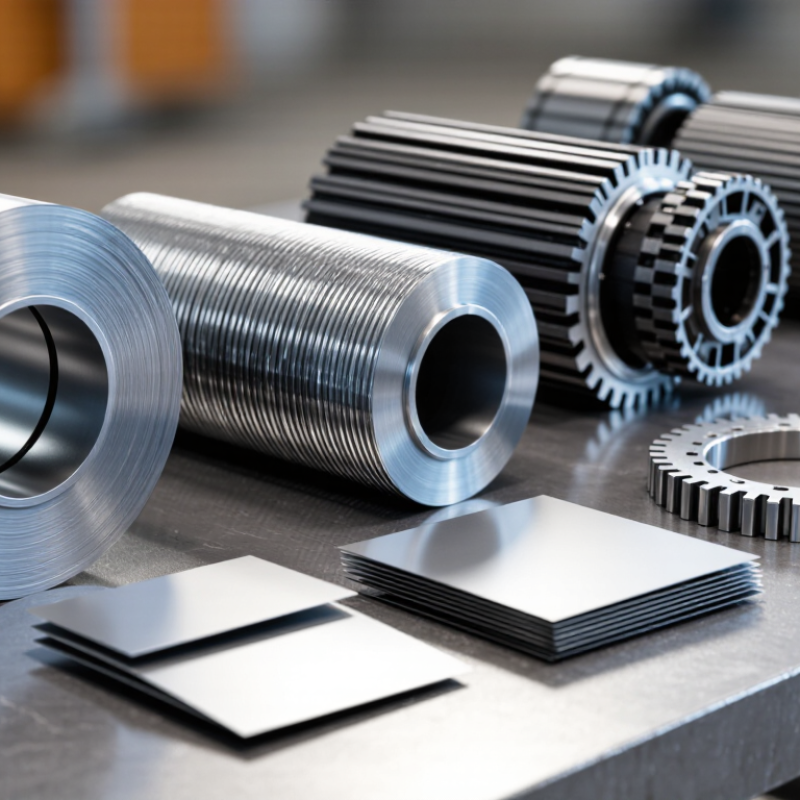
Silicon steel, also called electrical steel, is primarily iron with a controlled amount of silicon. Many commercial grades contain roughly 1% to 4.5% silicon, though exact compositions vary. Silicon increases electrical resistivity, which helps limit energy lost as heat from circulating currents. Carbon and other impurities are kept low because they can affect magnetic performance and processing.
Two common categories are grain-oriented and non-oriented silicon steel. Grain-oriented sheets guide magnetic flux especially well in one direction, making them widely used in transformer cores. Non-oriented sheets have more uniform magnetic behavior across directions and suit rotating equipment such as motors. Both are supplied as thin laminations, often with an insulating surface coating. Thin sheets and coatings help reduce eddy-current losses. Small details matter.
Core performance is not defined by composition alone. Thickness, magnetic flux density, operating frequency, and heat treatment also influence core loss and permeability. A grade with low measured loss may still be a poor fit if the equipment operates outside its intended conditions. It is tempting to compare grades using one headline value, but that can hide important trade-offs. Higher silicon content can improve resistivity, yet make the material harder and more brittle to process. Checking test conditions and intended use gives a more reliable basis for selection. I would still treat supplier data carefully; numbers need context.
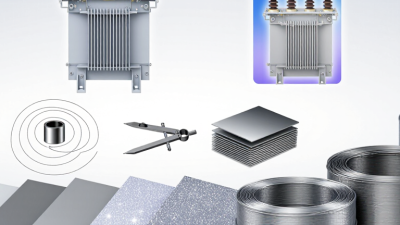
Silicon steel sheets are commonly classified by magnetic orientation. Grain-oriented electrical steel has a preferred direction of magnetization, created through controlled processing. It suits transformer cores, where magnetic flux follows a mostly steady path. Non-oriented steel has more uniform magnetic properties across the sheet plane. It is widely used in motor and generator cores, where flux changes direction as the rotor turns.
The distinction is useful, but not perfect. Real machines have joints, slots, and changing loads. These details can affect losses beyond what a material label suggests. Engineers also compare grades by core loss and magnetic induction, measured under specified test conditions. A thin sheet may reduce eddy-current losses, but it still needs careful insulation between layers. Look closely.
Sheets can also be described by thickness, surface coating, and delivery condition. For example, a coated sheet stacked into a motor stator helps limit current flowing between adjacent laminations. Coatings must tolerate cutting and forming without losing too much coverage. Grade numbers are not always directly comparable across standards or test frequencies. Check the test basis, intended flux direction, and operating conditions before choosing a type. Even a tidy classification leaves some real-world questions open.
| Sheet type | Classification basis | Typical thickness | Key characteristics | Common applications |
|---|---|---|---|---|
| Conventional grain-oriented (GOES) | Grain direction is aligned to favor magnetization along the rolling direction. | Commonly about 0.23–0.35 mm | Low magnetic loss and high permeability in the rolling direction; properties are less favorable across the sheet. | Transformer cores and other devices with predominantly directional magnetic flux. |
| High-permeability grain-oriented steel | A GOES grade engineered for improved magnetic orientation and permeability. | Commonly about 0.20–0.30 mm | Typically offers lower core loss or higher permeability than conventional GOES of comparable thickness; exact performance is grade-specific. | High-efficiency transformer cores and compact magnetic circuits. |
| Domain-refined grain-oriented steel | GOES with magnetic-domain refinement, often achieved through a surface treatment. | Often about 0.20–0.30 mm | Domain refinement can reduce core loss; the result depends on the treatment, grade, and processing conditions. | Low-loss transformer cores and other applications where energy efficiency is important. |
| Fully processed non-oriented steel (NOES) | Magnetic properties are developed during manufacture; the steel is generally ready for core fabrication. | Commonly about 0.20–0.65 mm | More uniform magnetic behavior in different in-plane directions than GOES; grades vary in core loss and permeability. | Motors, generators, compressors, and rotating electrical machinery. |
| Semi-processed non-oriented steel | Supplied for further processing, typically including a final annealing step after stamping. | Often about 0.35–0.65 mm | Final magnetic properties depend on the specified post-fabrication heat treatment and processing route. | Cost-sensitive motor laminations and electrical components with established annealing processes. |
| Thin-gauge non-oriented steel | NOES supplied in thinner sheet or strip gauges, rather than a separate grain-orientation class. | Typically about 0.10–0.30 mm, depending on grade and supply | Thinner laminations can help reduce eddy-current loss at higher operating frequencies; design and processing remain important. | High-speed motors, compact machines, and selected higher-frequency magnetic components. |
Note: Thickness ranges are indicative, not universal. Core-loss and magnetic-property comparisons should use the same test method, frequency, flux density, thickness, and material condition. GOES and NOES describe the principal grain-orientation classes; processing state, grade, coating, and thickness provide additional ways to classify electrical steel sheets.
Grain-oriented silicon steel is designed to carry magnetic flux efficiently along its rolling direction. That makes it a common choice for transformer cores, where lower core losses can support better operating efficiency. Sheets are stacked into core sections, and their coating helps provide electrical insulation between layers. The grade, thickness, and magnetic properties should match the transformer’s design and expected operating conditions. A good material choice still needs careful processing.
Core performance depends on more than the sheet specification. At corners and joints, magnetic flux changes direction, so cutting patterns and assembly methods matter. Step-lap joints can help manage flux transitions, but they require consistent placement. In practice, even a suitable grade may disappoint if fabrication introduces stress or uneven gaps. It is tempting to focus only on headline loss figures; that is not always enough. Review test data and manufacturing tolerances, and confirm performance in the finished core where possible.
Non-oriented silicon steel is designed for magnetic flux that repeatedly changes direction across a motor or generator core. Its magnetic properties are similar in different in-plane directions, making it suitable for rotating machines. The International Energy Agency’s 2011 report, Energy-Efficiency Policy Opportunities for Electric Motor-Driven Systems, estimated that these systems consumed about 46% of global electricity. That scale makes core losses worth attention.
For a motor builder, grade selection is a practical trade-off. Lower core loss can reduce heating and improve efficiency, while adequate magnetic induction helps keep the core compact. Thin, insulated laminations limit eddy-current losses. In the workshop, though, a sheet that performs well in magnetic tests may be less forgiving during punching: burrs, coating damage, and stress can affect the finished core. Small details matter.
Demand is also shifting. The IEA’s Global EV Outlook 2024 reports nearly 14 million electric-car sales worldwide in 2023, supporting growth in traction-motor applications. Yet that figure does not translate directly into a specific steel grade or quantity. A low-loss grade is not automatically the best choice; cost, operating frequency, manufacturing yield, and the motor’s duty cycle all matter. The right specification comes from testing the finished core, not relying on a datasheet alone.
Choosing silicon steel for a 2026 application starts with the magnetic circuit, not a grade label. Grain-oriented steel suits transformer cores where flux follows the rolling direction. Non-oriented steel is generally better for motors and generators, where flux changes direction around the stator. The distinction matters. A mismatch can increase losses and heat, even when the quoted grade looks attractive.
Compare core-loss data at the frequency and magnetic induction your equipment will actually experience. Check sheet thickness, insulation coating, stacking factor, and processing stress. Thinner sheets can reduce eddy-current losses, but may cost more and require careful handling. For a motor with frequent speed changes, test conditions should reflect its operating range, not just one catalog point. Small detail. Big effect.
Request traceable mill certificates and test reports, then verify performance on representative core samples. Cutting, punching, annealing, and clamping can change magnetic behavior; a datasheet cannot capture every production effect. Also weigh material availability and scrap yield against efficiency targets. A common assumption deserves scrutiny: the lowest-loss sheet always produces the best system. It may not, if cost, manufacturability, or operating temperature changes the result. Test the finished core before fixing the specification.
This chart compares commonly available thickness ranges, not guaranteed specifications. Non-oriented electrical steel (NOES) is widely used in rotating machines; grain-oriented electrical steel (GOES) is designed mainly for transformer cores. Choose a grade based on measured core-loss and magnetic properties at your intended operating conditions—not thickness alone. Available gauges vary by grade and supplier.